2011-12-21

Lessons from the sea for a voyaging family


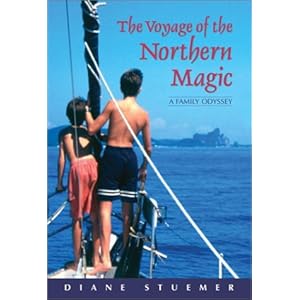
The Voyage of the Northern Magic: A Family Odyssey
By Diane Stuemer,
McClelland & Stewart Ltd.,
$37.99, 369 pp.
ISBN: 0-7710-8260-6
Available through www.nauticalmind.com and selected bookstores

If family-oriented sailing stories strike you as good Christmas reading, the late Ottawa circumnavigator Diane Stuemer’s tale of a four-year voyage around the planet in a 40-year-old steel ketch makes for solid Yuletide fare. I recently re-read a bit of this book, which I had bought when it first came out, and it's still a hell of a tale.

Herbert and Diane Stuemer, self-described as a typical suburban family with three sub-teen boys, found that the onset of middle age and Diane's brush with cancer were all the motivation they needed to uproot themselves and to follow a windborne dream.


Essentially an impulse buy for the Stuemer family, their aged 42-foot Dutch ketch , which would be renamed Northern Magic, would prove to be a sturdy, if not luxurious, home for the five-member family on their west-about passage. Before leaving, Diane Stuemer cleverly contracted with an Ottawa daily paper to provide updates on the voyage; not only did this spur enormous local interest in—and assistance for—their voyage, but it provided Stuemer with a basis for her book, the slick web site dedicated to their trip at www.northernmagic.com, and what appeared to be a burgeoning career for herself as a motivational speaker.

That career was unfortunately cut short in 2003 when Stuemer's melanoma flared up again into cancer. I saw her speak a few weeks before she died, and she was a very positive person. Her story was inspiring, but also a cautionary tale: my wife and I have, unlike herself, striven to prepare ourselves to equal and complementary skill sets and to gather diverse yacht-handling experiences. A handyman skipper like Herbert Stuemer, no matter how high his own level of skill, with kids aboard and an initially new-to-sailing wife yielded no foundation in safety for running their boat: there are hair-raising early trials that underlined this for my wife and I in big, red-ink strokes.


Diane Stuemer possessed a degree in journalism and, before becoming 'first mate' on Northern Magic, a career in advertising. Both skill sets facilitate her telling of a tale of adventure that fairly crackles off the page. Stuemer and her husband decided to world cruise essentially on impulse, and both had to muster up a great deal of enthusiasm and positive thinking to overcome some of the hurdles the seas, the vessel and the inhabitants of various ports threw at them. My heart went out in particular to Herbert Stuemer, the father and 'captain' of Northern Magic. As as a former renovator and technical teacher and all-around Mr. Fixit, he by default performed the seemingly constant repairs and adjustments needed on the old boat. I lost count of the number of times he seemed to be installing yet another rebuilt alternator upside down in the bilge during a nausea-making gale. Commendably, Stuemer isn’t shy about saying what equipment worked like a charm…and which failed miserably. As for the boat itself, old steel Dutch ketches seem a bullet-proof choice for the inexperienced sailor. As can be seen on this blog's boat rebuilding sister, The World Encompassed, I took some of those ideas of "pilothouse" and "steel" to heart when we bought Alchemy, our steel pilothhouse cutter, in 2006. All credit to Northern Magic on that score.

Speaking of equipment issues, it’s interesting to compare the Stuemers’ story with a similar one from 15 years further in the past: the voyage of Paul Howard and Fiona McCall’s Lorcha. As told in two popular books from the ‘80s, the circumnavigation of Lorcha seemed by contrast to the Stuemers to be more relaxed, possibly because of the greater experience of the sailing couple, and probably because the earlier boat’s most complex gear was a SatNav. Northern Magic, due to Diane Stuemer’s journalistic needs and the requirements to keep the kids occupied with electrons, featured laptops and e-mail, radar and GPS and a lot of gear not available to or generally desired by the smaller boat and crew of Lorcha a mere 15 years earlier.

Another difference between the '80s and our new century is that it’s a nastier world for cruisers these days and wasn't that different at the turn of the millennium. Stuemer relates problems with bureaucracy-mad officials, pirates in the Red Sea, and even an unwanted, ring-side seat to Al Qaeda terrorism. On the plus side, however, Stuemer found her family becoming gradually involved in the often impoverished lives of the folk they met. This has led to the long-term support of orangutan habitat preservation in Borneo, and paying for the education of some young people in Kenya. This is the best part of Stuemer’s narrative, in my opinion: how cruising eventually took her away from her own concerns and gave her a broader view of the world, one in which even a limited effort could make a great difference. That alone takes this tale well beyond tourism.

2011-05-20

One from the history books


Time's a funny thing. In August of 1979, I was a week past my 18th birthday, and while I had an ex-sailor as a father, I harboured no ambitions I can recall (pun intended) to set off to sea and, if not to challenge the elements, to accommodate them without killing myself or the family I had yet to acquire.

Last year, I met John Rousmaniere, an American sailor with a French name known for sailing in the notorious 1979 Fastnet race that killed 15 yachtsmen, and for writing the widely consulted Annapolis Book of Seamanship, now in its 3rd edition.

I met Rousmaniere at a 2010 Safety at Sea seminar I wanted to take to consolidate my safety knowledge after having a testing, if educational, heavy weather delivery in 2009 in the Atlantic. I found him a pretty sober and down-to-earth speaker, who freely admitted that after a lifetime of sailing, he didn't have all the answers, but the answers he did have might prove broadly useful.

I found myself thinking that while reading his now-"classic" work, Fastnet, Force 10. Rousmaniere sailed in that race, but on a relatively large boat and in somewhat less fierce conditions than who was faced by the IOR-design rule 35 footers. His was a challenging race, but neither a fatal one, nor one from which he required rescue in appalling, washing-machine conditions of a full gale (50-60 knots or more) coming in hard and fast over shoaling waters inbetween Ireland and Britain, an area known as the Western Approaches.

For those not familar with the Fastnet race, it is a biannual, roughly 600 mile beat (usually) from the more southerly parts of England to a designed rock off the southwest coast of Ireland and back. While not particularly long in terms of ocean racing, it has been noted as challenging and very competitive, and has a certain prestige that has attracted sailors from the pro ranks down to the weekender. Several qualifying races are required, but in 1979, the level of aptitude could charitably be described as variable, as were the presence of two-way radios and other safety gear aboard. As Rousmaniere notes, a certain gung-ho attitude prevailed, and valour sometimes trumped discretion once the story of the explosive and tight low-pressure system that dealt so much death in the Celtic Sea became known.

Earlier, I referred to Fastnet, Force 10 as a "classic". I use quotes not only because John Rousmaniere himself is neither dead nor, to my knowledge, has ceased to sail, but rather because so many other important works of sailing in the last 30 years refer to or quote from, this book. It is important and relevant because it relates a specific story (the tragedy falling on a crowded race of yachts small and large from random and indifferent Nature) to a general human tendency to sometime choose to persist in an action in the face of increasing danger. While Rousmaniere relates some tales of pure bad luck, in which experienced sailors were killed largely not via their sensible and prudent actions, but through hard chance, he also points out situations in which staying with a half-sunken boat may have been the wiser course than was launching a life raft (some of which proved inadequate or faulty) into a very confused sea. Given the attrition rates of certain boat designs (the IOR rule was prevalent at the time, with its flat bottoms and pinched ends and skegless rudders), the rules were altered to beef up certain classes, although it remains unclear if any boat could have continued in one piece in some of the extreme conditions this Fastnet race encountered.

Nonetheless, and unlike some at the time who didn't sail the race, Rousmaniere does not judge, because he did not face the very stark choices before some of the crews that found themselves half-awash, dismasted and with injured crew, watching breaking seas approach from several directions. (Sincerely, this book, like many of its similar "boat race goes bad" progeny, made me quite tense at times, but I hope to learn from the experience!).

Speaking of progeny, Fastnet, Force 10 is the granddaddy of some similar works, such as A Voyage for Madmen, the story of the 1968 solo round-the-world boat race, and Fatal Storm, about the 1998 Sydney-Hobart race, another legendarily rough passage about the same distance as the Fastnet. I have also read, and alternated enjoyment with shuddering, the very good Rescue in the Pacific, about the 1994 "Queen's Birthday Storm", a well-described if poorly predicted "weather bomb" that fatally smacked participants in a New Zealand to Fiji ocean race.

Rousmaniere was arguably the start of the modern post-race "bad storm" narrative, and his book still holds up. I am just surprised it took me this long to read it. And lest you think me a touch morbid in having read so many tragedy-at-sea stories, I must convey that I learn a great deal about everyday sailing from these books, and how much of survival at sea is less to do with the boat and the gear (although both in failure mode can be very challenging indeed), but with experience, mental attitude and flexibility. Yacht racing is a wonderful sport that few have the drive, skill and sometimes deep pockets to pursue. It attracts a "type", frequently a very driven, self-actualized personality that enjoys a bit of conquering now and then, particularly if it's the elements that need to be shown who's boss.

It goes without saying that "the elements" will provide an unshriven burial at sea at unpredictable intervals to even the most confident Master of the Universe and that turning back or heaving to or even running back to England might have been the prudent choice. Many did, and unfortunately, we barely hear from them, the "retirees", some of whom might have provided insight as to at what point you decide to let the sea have this round. Still, an exciting and relevant story I was glad to read.

2011-05-08

A tale to tug at the heartstrings


Most Canadians are familiar with the work of Farley Mowat, a populist historian and tale-spinner whose fictional, historical and reportage work featured in my school days, and likely many others. Americans and other foreigners may know of him from the films Never Cry Wolf and Lost in the Barrens.


I thought I was pretty familiar with his books, but I recently stumbled upon an early (1958) non-fiction entry of fairly specific nautical interest called The Grey Seas Under: The Perilous Rescue Missions of a North Atlantic Salvage Tug. "Perilous" is somewhat of an undersell; the ice-crusted, gale-lashed, and eventually U-Boat infested voyages of Foundation Franklin, an ocean-going salvage tug powered by steam and the near-infinite capacity for hardship of her various crew make for exciting page-turning. Part of this is because Mowat vividly brings to life the desperate poverty of the Great Depression in maritime Canada. The purchase of Foundation Franklin, originally built in 1918 as a Royal Navy tug intended to tow damaged destroyers to safe harbours, but superannuated by peace, gave the Foundation Company of Canada a new trade as ocean salvors, a dangerous but potentially lucrative sideline to dredging and running harbour tugs.

Once refurbished, Franklin had a less than stellar early career, as there was no real tradition of ocean salvage in Canada, and her skippers and crew had to learn on the job after many failures, some harrowing. Soon enough, however, it was Franklin that would venture out in the most appalling conditions to expertly lay messenger lines over the bows of disabled and sometimes actively sinking ships, and would, under threat of fuel exhaustion and with no hope of others rescuing them, get the ships back to Halifax or St. John's.

The salvage business is legalistic and highly competitive. Salvors have specific rights and duties, but the actual process was, in the days before easy radio communications and navigational beacons, also highly speculative. A disabled ship could issue an SOS, but might refuse to take a tow if the salvage tug could even locate them. Locating a drifting ship was a black art of the salvage skippers, who might have a rough bearing to go by thanks to primitive radio direction finding...but only if the ships afflicted could themselves continue to transmit. Some American ships wanted American tugs to take them to American ports, even when this course layered on extra hazards. Others would decline to take a tow because of the contractual obligation. Some ships were able to fix their problems and did not need assistance, leading to a wasted trip and tons of coal burnt for nothing. Others would simply disappear beneath the waves before the tug could arrive.

The Second World War brought added drama. The German subs were everywhere in the first years, and defence against them was weak at first. The tug itself was a legitimate target, but Franklin, despite some very close calls, still managed to bring dozens of ships with vital fuels, foods and war materials back to port. The job was so rough, it became hard to attract crews: overtime and regular meals in a nice, warm war factory must have seemed better than sidling up to out-of-control freighters in 25-foot seas and 80 knot storms.

The fact that I knew very little of this story is particularly poignant to me as my late father was a teenager in the British Merchant Marine during this time and it is quite likely that some of the ships damaged by enemy action or disabled by terrible storms were taken in tow by this little if powerful and hardy vessel. The role of the Merchant Marines of Britain, Canada, the U.S. and Norway is not nearly as venerated as is the role of the fighting forces, and yet to my mind, it takes greater nerve to crew on a single-hulled tanker filled with aviation fuel through the U-Boat "wolfpacks" than it did for large proportions of the armed forces, who, after all, may have served proudly without ever getting near the front.

So the story of the salvage tugs that saved these ships and their crews is perhaps doubly unknown, and at the time of this writing, May 8, 2011, the 66th anniversary of the allied victory in Europe, it seems fitting that Farley Mowat wrote such a fabulous and inspiring account of men who worked through the entire war as more or less sitting ducks, and yet did not hesitate to venture out in service to others. This review also notes that Mr. Mowat is still with us and still writing, and this week will celebrate his 90th birthday. My wife's grandmother died last year at age 93, would occasionally mention Mr. Mowat as she was his babysitter around the year that Foundation Franklin came to Canada for a long and eventful career. Small world, but I'd hate to take it under tow.

Highly recommended if you can find it.

2011-04-05

Beyond the Coral Sea: Blink and you'll miss the past


Perhaps the biggest gap in our plans to circumnavigate in the next few years is located in the south-west Pacific, the quite bloody large area between the teeming hordes of Indonesia and the "same but different" country/continent of Australia. Traveller and author Michael Moran's Beyond the Coral Sea: Travels in the Old Empires of the Southwest Pacific remedies this somewhat, or rather gives me a taste for going to the islands around and to the east of Papua New Guinea that I didn't know I had.

Think "tropical island paradise" and most Westerners think of Polynesia. Movies, TV and tales of HMS Bounty have inculcated a sense of flowers, bare-breasted young women free with their favours, and a life of leisure in which one might be roused to husk a coconut or spear a fish. Less prevalent is the idea of cannibalism, obscure magical rites and "the blackest people on Earth".

Welcome to the Solomon Islands, friend.

Moran describes Papua New Guinea (PNG) and the various Solomon, Bismarck and Trobriand Islands as the last frontier of European exploration and, inevitably, exploitation, and he's not wrong. The Melanesian cultures, almost immeasurably variable and yet seemingly linked in ways designed to appal the most imperialistic Eurocrat, proved an obdurate nut to crack for the cadres of missionaries sent to civilise and/or Christianize the locals, but this didn't deter the Germans, the Dutch, the British and finally the Australians for trying. The Japanese had a brief, destructive run during the '40s, but they didn't treat the Melanesians any better, and in some ways, considerably worse. The history of the constantly volcanic island of Rabaul encapsulates a place that not only saw outsiders in residence, but at war. The lava ate most of their works, anyway. Only crazy Aussies remain.


Just the history of "first contact" of PNG's vast coastline could make a book of itself alone: Being a "final frontier" attracted a passel of eccentric characters probably unsuitable for polite company in 19th century Europe and yet made a home (unless they dropped dead of fever or were eaten) in the very wild wilds of PNG's coast and interior...an interior, as Moran points out, still not entirely explored even today.

As the author relates with frequent ironic or funny asides, the cannibalism and pro-sex attitudes of Melanesia's array of tribes and linguistic groups were charted for a prurient Western audience by pioneering anthrologists like Bronisław Malinowski, who didn't necessarily get it right, but by bothering to live there at all with an eye not blinded by Western religion and mores, perhaps eased the transition of Melanesia into the world community simply by writing non-judgementally about it. Moran's relation of PNG's speech is most fascinating to a language buff like myself. The use of "pidgin" is everywhere: a creole language elevated to a lingua franca due to PNG's incredible diversity of native tongues, none of which have more than regional influence, it seems.

PNG and its islands are a new (1975) and sometimes uncertain country and Moran wonders if Western notions of democracy and governance can work there. So do many of the citizens, some of which question the existence of a Western form of governance in an arguably artificial nation made from bits that only colonialism has put in common. Nonetheless, PNG needs some collective voice, if only to regulate its continuing exploitation of its myriad natural resources by the nominally "civilized" world.

Moran observes that the slow dissolving of tribal ties cannot be said to be entirely positive, and the durable heathenism of old just doesn't have the juice of missionary worldviews, even as it persists in some places in a sort of synthetic fashion. Still, Moran finds hope on distant, coral-sand shores, along with beautiful, friendly people seldom visited not only by "outsiders", but by other PNGers in such a rugged, widely scattered landscape. Visitors will get there, but don't expect either Western adherence to timetables or safety standards in the (likely protracted) process.

A great introduction to a rich and imperfectly appreciated part of the world, Beyond the Coral Sea gets my strong recommendation.

Half Moon not half bad


Before becoming the world's most famous historical castaway after William Bligh, English explorer Henry Hudson was known as a bit of a bad boy. He would work for the highest bidder, but then would use their ships, gear and men to sail wherever he felt, presumably utilizing his orders for the 17th century version of toilet paper or perhaps as firestarter.

Like his rough contemporaries Francis Drake and Walter Raleigh, Hudson was "results-oriented", naturally cagey about his plans, loath to commit much to writing and usually had three or four contrasting agendas in play. Plan B for this fellow was to keep mum about the rest of the alphabet, each letter of which signified yet another exit strategy.

As we learn in Ontario sailor Douglas Hunter's Half Moon: Henry Hudson and the Voyage that Redrew the Map of the World, Hudson was a rogue, but not particularly lovable. He was, however, very good at picking up the fragments of information that circulated among the small cadre of skipper/explorers/freebooters who regularly visited the imperfectly known shores of North America, where overlapping claims and failed colonies did not dissuade those merchants eager to exploit its unestimated riches (and perhaps find a good source of slaves). Better yet, the various inland rivers from Virginia to Greenland might be the fabled Northwest Passage to China, of which considerably more was known and lusted after.

Unfortunately, Hudson's voyage to the river that today bears his name, and to the complicated harbour of today's New York City, is not well documented, and the author's original research, culled from second-hand accounts, Dutch mercantile writings and painstaking research of long-outdated sailor's charts, gives a sketchy if probable outline of where Hudson's small ship, Half Moon, and largely Dutch (and rebellious) crew touched and, after a fashion, explored.

The history is therefore naturally couched in "likelies", "perhapses" and "probablies", but this is not to be faulted. Hudson seemed a cagey, secretive sort, and as his stock-in-trade was less native trade goods and more raw information no one European knew, it is inevitable that four centuries have obscured his accomplishments. More well known, however, is the clashes his crew had with native North Americans, and how their presence led to large-scale disruptions of the social order, as well as the better-known effects of European diseases.

Within a couple of decades after Hudson's death at the hands of his own crew in the frosty bay named after him (which happened a mere two years after his probing of the Hudson River at Manhattan and beyond), the area now known as New York City would be established as a Dutch outpost, and later as an English city. Hudson had, very likely, no concept of how his attempt to find the right Northwest Passage would play out, but thanks to this book, we do.

2011-02-22

Making a list, checking it twice


Sailing folk are notorious for making lists. Spares, provisions, waypoints, litres used, litres not used (see "liquor consumption"): It's all grist for the methodical sort of mind associated with sailing. It's also emblematic of the aging mind most typical of the cruising set: There comes a point in life, well before one is truly senile, when in order to remember something new, like the code for the critical filter you have to acquire for that...thing...that needs the critical filter, you have to forget some older, arguably less important factoid.

You just hope it's the name of your Grade Two teacher and not how to tie a rolling hitch to snub off a flaying rode.

Someone who appears to have remembered more than me is Beth A. Leonard, who with her life partner Evans Starzinger, has sailed capably around 100,000 NM in what must be approaching 20 years of ocean sailing. She's done it in two boats, a Shannon 37 called Silk, and an aluminum Van de Stadt 47 called Hawk. Both can be considered "nice boats", but are rather different just as our classic plastic sloop is rather different from our steel pilothouse cutter. The couple have an extensive web presence here, so I'll quit with the biography and make with the book review.

Leonard appears to have used the long passages to make notes about nearly every aspect of passagemaking in smaller (under 50 feet) yachts. She delves into the psychology of the successful cruiser, "successful" here implying an enjoyment of the sometimes frill-free lifestyle in a manner not endangering the self or others. Healthcare, watering and feeding of the crew is also covered in details that might not occur to the more casual sailor, such as "keep your own water bottle filled and drained twice in a day and don't share its germs". Medical issues are discussed (perhaps even some related to bottle-sharing), as is the reality of foreign bureaucracies, i.e. when to bribe, who and why it might be a good idea.

She has some great, rarely seen analyses of the true expense of acquiring, fitting out and cruising on yachts (in my ongoing experience, three different and not closely related cost centres) geared to different levels of equipment, luxury and convenience. This is the part (along with the seamanship tips, which I read like it's the wisdom of the boudoir) I really enjoyed: You can extrapolate the numbers in whatever edition you find (I have the 2nd edition) to whatever national currency and/or state of inflation you are trying to flee, but I found the examples of the "budget", "typical" and "high-end" cruisers' budgets to be close to what I read on the blogs, and close to what my current fitting-out expenses are.

If nothing else, those considering the cruising lifestyle could use Leonard's book to test-drive their economic assumptions, as well as their opinions on the level of seamanship required.

Speaking of which, Leonard and Starzinger are quite happy to avail themselves of the armoury of communications and navigational aids geared for cruisers. Seamanship to them appears to be a combination of prudence and familiarity with a variety of "inputs" in order to make the least hazardous decisions. The book is filled not only with their opinions on what works and what doesn't, but "case studies" and surveys from the wider cruising community on what device, technique or habit paid dividends...and which have not. Caveat sailor, I guess. Were I a windvane maker, for instance, I would hand Leonard a plaque, or maybe a free windvane.

The Voyager's Handbook is rightly praised as a "must-have" on the shelves of many a cruising boat and I have to concur: It's coming along not only as an aide-memoire, but as a compendium of nautical tips and ways to think about living aboard in safety and good humour. You can argue that Leonard and her man may not be the best sailors on the oceans, but you would be hard-pressed to find ones who seem to have thought about all aspects of the undertaking. And thus it makes this list.

2011-02-21

Planning for the worst via a good read


A good boating buddy of mine, David George, gave me this book as a present a few years back, and coincidentally, I received another copy when I took a Safety at Sea course in 2010. I noticed that despite its 2003 publishing date, and the fact it's still pretty relevant, this book has been remaindered at my local nautically themed bookshop (see here), and so it's certainly cheap to acquire.

Written by Chris Beeson, a professional sailor and journalist, The Handbook of Survival at Sea combines clear illustrations and no-nonsense prose into a very good reference book most distance sailors should consider carrying. Frankly, most distance sailors should already know most of this stuff, or they risk themselves and others by their ignorance, but that is just the previous post soaking into this one.

Beeson assumes that your boat has gone and you've taken to dinghy or (more likely) a lift raft. His focus is less on getting somewhere than it is on maintaining health and attitude long enough be found. As was seen in the sinking of the S/V Concordia (which sank just over a year ago from this post), it was a triumph of training over sudden misadventure that everyone aboard got into the rafts, but even 40 hours on the ocean made for depression, salt sores, exhaustion and lethargy. Attitude, inventiveness and fitness are key, says Beeson in his book, and some of the tales of long survivals at sea were based on this inner fortitude. Today, of course, it's the rare sailor that doesn't carry an EPIRB or even a satphone into the raft, but that doesn't mean it will work, or, as has been known to happen, that the various search and rescue (SAR) services will be able to co-ordinate your recovery in a timely fashion.

In addition, there are still many places in the world beyond the ability of rescue helicopters or planes to reach, and seeing a raft from a ship (which may have to divert hundreds of miles to attempt to see what is in essence a speck on the ocean) may not go off well on the first tries. You may be adrift for some time in a very hostile environment, and so Beeson gives descriptions of supplies, tools and gear to consider bringing, such as medical kits, fishing gear and how to ration vital things like water, and how to collect fresh water via condensation at sea. He breaks down the book into "coastal" (where more accidents happen due to the number of sailor and, perhaps, their relative level of experience), and "offshore", where the better-prepared sailor may nonetheless spend a longer time prior to rescue.

Fishing, obviously, is one way to keep occupied, particularly as the food brought into the raft is exhausted. Care is needed using hooks and improvised spears on a rubber liftraft, obviously, and Beeson spends a lot of time explaining how to manage this, how to handle larger catches and when and why a fish would not be good to eat. Attracting rescue is discussed (again, flares in a raft can be hazardous!), as it the possibility and the dangers of self-rescue, in which a liferaft is cast ashore, but far from habitation or aid. Something I knew, for instance, but hadn't integrated into my "mental survival kit" was that if you can spy a creek or river emerging from an otherwise coral reef-strewn shore, make for it, because corals won't grow in fresh water, i.e. no reef there to cut your raft to ribbons. Small stuff, to be sure, but a measure of how the book logically tackles possible real-life contigencies.

In many ways, this book reminded me strongly of one a fair bit older, Survive Anywhere Safely. Written by a British former commando, it's a compendium of survival techniques in nearly every environment that not only assumes that you won't be rescued right away, but that it would be a bit of a letdown if you hadn't built a condo out of twigs, skins and skulls by the time you were.

Survival At Sea, being a more recent book, is more focused and likely more relevant. I can't recall any situation in which advice on how to remove a pinned arm with a penknife was given, but nonetheless I endorse this book (particularly as it's now in overstock) as a way to sensibly prepare one's safety gear, survival supplies and oneself should you have to step up into your raft from a deck awash with the sea.

2011-01-23

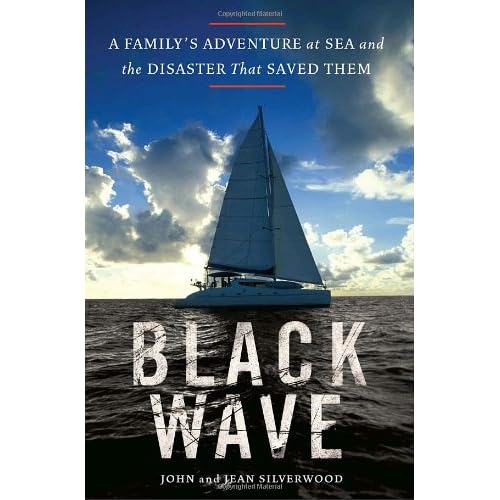
Black Wave: Leaving seamanship in the dark


Captain's library log, January 3, 2011: I am 3/4ths of the way through their book Black Wave (it's remaindered in paperback), and rarely have I cycled from anger to sympathy so quickly. I haven't sailed these waters (although we intend to), but even I know that they are incompletely charted, sometimes inaccurately charted, and that a watch and loads of offing should be maintained at all times. Not just for the reasons of reef avoidance, but because I imagine that storms regularly blow shallowly rooted palm trees into the ocean. Hitting one could ruin your whole day.

January 4, 2011: Ah, a variant on the old saying, "if you can't be a good example, you'll have to be a horrible warning". The gory, god-ridden saga of Black Wave continues, although I am not finding it restful.

There does seem to be a divide between the cruisers/voyagers who rarely have problems (and if they do, they are largely resolved by the skipper and crew without a lot of shouting) and those for whom sailing is lurching from one crisis to another, spewing money and unhappiness like ladled chum into hungry waters.

But a silver lining? Nobody comes to sailing with a lifetime of shoreside competence and rationality only to lose it upon weighing anchor. People lacking in the qualities ocean sailing demands merely transfer that lack from dry land to salt water. I'm not saying that is necessarily the case here; the skipper "grew up on boats" and seems to work the sails and helm properly. But there are many instances where he seems defeated by the boat's engines and balky gensets, electronics, etc. and has to pay others...heavily...to fix them...poorly.

This wouldn't be the first instance of a "1970s sailor", who is well able to work with consummate skill a Windex, the winches, the Whale Gusher and the compass on a 30-foot coastal sailboat, being defeated by the intimate and extensive technical knowledge required to understand, never mind maintain, a much larger, far more tricked-out modern cruiser. I myself am still making that transition, and am concluding that the Luddites were onto something, despite the fact that I am conversant with many technologies and generally don't require help to get past the welcome screen.

So it's possible that Black Wave's boat-show-bought radar wasn't on because it didn't occur to anyone aboard to turn it on...or how, once on, the guard function wasn't activated, or the XTE function on the GPS worked, or even how to run a simple plot that would have revealed a fatal drift into danger.

Maybe they'll be an answer in the last part of the book, but so far, it's comparing their wreck to that of a brigantine 150 years ago that stranded in practically the same spot, a comparison I find specious at best. If that known reef is so goddamned sneaky and barely visible, why run so close and at such a speed, at night? Is this the family version of Rule 62?

January 5, 2011: Still doesn't really explain why no radar, no deck watch, no generous offing.

I finished the book last night. The last section is somewhat better than the first, but it's still more drama than sense.

January 6, 2011: Getting into debates in online forums about this book, which some sailors find "inspirational" in a way I find inexplicable. I am coming to the conclusion that for every Luddite skipper who figures Morse code, signal flags and the ability to tie a sheepshank will see him through (and not all of these people are necessarily old; some are "purists" and/or hopelessly romantic), there are others who see sailing as a big video game with somewhat more sunshine and fresh air.

Tying in the autopilot to the GPS...while convenient...is certainly symptomatic of this, as we see more and more frequently bad accidents from either failing to notice something isn't working, exhibiting too much faith in charts either in error or outdated, and simply failing to look around the boat.

The result? Boats come to rest on the piers built last year that simply aren't noted on that bargain circa 2007 chart collection you traded for a bottle of rum at the last raft-up. Your course is west in the afternoon, and yet the absence of the sun in your face and the old magnetic compass you haven't bothered to swing and which is reporting "90 degrees" goes unnoticed, because the NavNet says "270 W" in large, daylight-visible screen font. And the NavNet cost four grand and is even in "3D", like Avatar, so it must be right...right?

So we are like chimps confronted with common hand-tools and delicious nuts to crack. The old chimps just keep biting, because that used to work when their teeth were better and more numerous. Other chimps waste time and cut themselves using screwdrivers and hacksaw blades. Only the chimps who have used the right-sized rocks are going to figure out that a hammer is a right-sized rock with a lever attached.

The trouble is, of course, that either the old salts or the electronics-addled new sailors might both need rescuing from their lifestyle choices by the competent sailor who understands his tools and the limitations of those tools. If I put an Autohelm and a GPS in your car, and a few actuators, would you leave the driver's seat and have a nap in the back? And yet this is perhaps one answer to what happened to Emerald Jane, the honking big cat destroyed in Black Wave (why does the title imply they were flipped in the ocean? They were crunched on a reef they hit near full speed. "Black wave" of nausea, perhaps, because all this was avoidable.).

I just spent an hour devising a fuel polishing system with my diesel dealer this morning with exactly this in mind. He asked why I was installing a FilterBoss and separately filtered cross-transfer pump and Baja filters at the deck fills, and various other amenities, like running all tank vents to goosenecks high on the cabin, for offshore work. I said that a wise sailor once noted that contaminated fuel caused engine problems One, Two and Three in his experience, and the diesel dealer agreed that he found this all too often, as well. I said that with 50 feet of fuel hose, I could offer "Remedial Raft-ups", do fuel polishing for other cruisers, and thereby barter for the things we needed. He said that given the lack of knowledge with which some cruisers go to sea, ideas like that could pay for the trip!

Back to Black Wave: The book is also sloppily edited and the wife does most of the telling in ways that annoy the sailors in the audience, such as calling stays and shrouds "lines" and repeatedly describing the height of the mast as "eight stories", (should be, of course, "storeys") instead of in feet or metres.

I haven't finished it, but I don't expect to find the words "I should have kept a watch instead of dicking around with the gooseneck" or "I should have hove to/set a sea anchor/noted drift". There's a lot here that's reasonable about family tensions, but the skipper is described as a recovering alcoholic who dewagons on the first part of the trip, and who seems to have difficulty with focusing his concentration.

Perhaps he didn't think about how fast a cat could close with an atoll?

Didn't mean for this to be a book review (but now it is a book review, of the "stay away" variety), but this tragic tale got on my nerves. The story of the 1994 Queen's Birthday weather bomb, by contrast, provided a lot of good survival tips and frankly, a lot less "shallow waters".

January 23, 2011: It's been two weeks of quite cold winter weather. The Boat Show came and went, with lots of nautically themed tumblers for sale and not a lot of safety gear...par for the course. I find myself still pondering Black Wave. This book made me quite annoyed. Like howling in exasperation and chucking it across the room annoyed. I only recommend it to people who enjoy the sight of head-on crashes with drunken driving as the cause. It inspired me to always keep a deck watch...so I can avoid auto-piloted boats in the loosely charted South Pacific who pick sunset as a good time for everyone to go below and watch a movie.

These people lived IN SPITE of what happened to them. I finished this book two weeks ago, and my feelings have hardened even more, and I found the whole "drama" aspect to be written with an eye to securing a movie deal. Also, as an aside, prayer is no substitute for seamanship.

I hope the authors learned something. I did, but it wasn't really a good thing.

2011-01-02

The line on the *first* "Great War"


Like many a social sailor, I've long had a fascination for the professionals, whether they be the fighting Jack Tars of the Napoleonic era, or even today's merchant navy personnel, who, like my late father in World War II, seem to once again in many places be facing violence to their ships and their livelihoods.

Having devoured a few shelves of Kent, O'Brien, Forester and that ilk, I feel a particular fondness for books that deal with the over two decades of worldwide struggle between France's revolutionary and subsequently Napoleonic rulership and Britain's tottering establishment in concert with a series of "subsidised" and often defeated allies in Continental Europe. South African-born Canadian journalist Noel Mostert has done a remarkable job with The Line Upon a Wind (sample pages here) in both contextualizing and deepening a story I thought I knew: how the Royal Navy flirted with the odds, mutiny and the incompetence of many senior officers to keep Napoleon from utterly dominating Europe. Mostert, who states that contemporaries referred to the 22-year struggle as "the Great War" (something I didn't know, having always heard that term reserved for World War I), finds much to admire with the British navy, and much to condemn in its brutal discipline, its stale tactics, its sanctioned jealousies and its almost institutional arrogance, particularly after the victory of Trafalgar essentially finished "big ship actions" and proved that the way forward was in smaller, more nimble frigates.

Mostert relates, not entirely without relish, how it took a fairly one-sided thumping from an enemy...the United States...considered not very seriously when considered at all to realize that a fighting spirit, easy access to the grog and the finest collection of sea shanties would not, in fact, beat sailors as good as the British fighting in newer, technically superior ships. Time and again Mostert reminds his readers how much the British success (which was by no means consistent or properly exploited) was bought with men's lives, men who spent literally years at sea without stepping ashore, men who, inevitably, mutinied or deserted, even to the French, to escape lives too miserable for the Admiralty to generally acknowledge, never mind remedy. The connection between the appalling conditions and capricious commands aboard and the high rate of desertion in the Royal Navy was not easily established until, it seems, near the end of the war, and even then, "tradition" held too many official attitudes in thrall to the legacy of the "Articles of War".

Mostert's doorstopper shines light into corners less known: the run-up to war, the rapidly changing economics that fattened merchant pockets as it bankrupted governments, and the chaotic inability of the Jacobins to use their better ships using new tactics...proving, as did Stalin, that killing a large part of your military officer class tends to strangle initiative. His Canadian background comes through with a focus on the "War of 1812" when the lakes I sail on were the scene of a forest-backed arms race to get ever larger warships built on stretches of water without today's locks to move them up or down the chain. "Fleet actions" on Lake Ontario were intense, but brief; neither side could dare alter the balance of power when one hundred soldier in front of the right isolated fort could secure Spain-sized chunks of wilderness, along with varying numbers of native allies or enemies.

Best of all, here, however, is not just the focus on battles and tactics, but the perceptive takes on the personalities that the Royal Navy nurtured, sometimes in spite of itself. Nelson and Napoleon are seen, even after Nelson's almost inevitable death in 1805, as brothers in spirit while enemies in arms, and receive a lot of attention. Less well-known names, however, like Codrington and Hoste, get a full discussion, and their inventiveness and daring became a hallmark of why the British prevailed in this conflict despite, as the author lists, a daunting number of reasons why they should have fallen before old Boney like millions did before them.

This is a great companion piece to Arthur Herman's 2004 brick To Rule the Waves: How the British Navy Shaped the Modern World, but simply isn't quite as well written and cannot, due to the far greater time span covered, drill down so exquisitely into the pulp of why Britain with its rotating cast of semi-competent politicians and mad/bad royalty, its dubious financing and alliances and its frequently compromised ships kept the French bottled up in their ports, like furious bottled wasps unable to wield their stingers. Very much recommended.

2010-12-06

Capturing the cruising couple dynamic


I came across this story of a superficially mismatched Welsh couple's attempt to take up the cruising lifestyle by chance, and was surprised and gratified that it captured what I understand (admittedly ahead of time) to be the challenges of setting off on long-term cruising where husband and wife are co-skippers.

Author Gwyneth Lewis was the National Poet of Wales, a position I would have suspected to have existed, but which did not exist, apparently, until recently. She is also a clinical depressive in (mostly) recovery and is a recovering alcoholic, as is her considerably older husband Leighton, a fit but fury-filled former merchant seaman with a great deal of experience in boats, but not, significantly, of sailing them.

In Two in a Boat: A Marital Voyage, the bookish and self-doubting Lewis recounts accurately the transformation of the couple's marital dynamic from one of parity to one in which Leighton is referred to as "Captain Bastard". Now, an account such as this could be hard slogging, but Lewis's dry wit and sharp honesty about her own nautical shortcomings and (perhaps) too tender feelings concerning her husband's impatience with said shortcomings, is very revealing and says much about the moving needle of the cruising couple dynamic.

The "Captain Bligh" effect is well known in the cruising community, and many a discounted, fully-fitted yacht is available at Gibraltar, Panama and other cruising bottlenecks around the world's seas due to it; these boats are forlorn, floating testaments to ongoing divorce proceedings as wives and husbands pass the breaking point over life aboard. It seems, time and time again, that you can have dodgy amenities, bad weather and cramped, damp saloons, but if you have a screaming male skipper, it's time for most women to demand to be let off the ship.

Why, however, do skippers scream?

To her credit, Lewis does not look for easy answers, and she is frank about her inexperience. She (rightly, in my view) ascribes husband Leighton's growing irritation to his fatigue and the realization that even as he is the alleged "voice of experience" aboard, his own considerable skills are neither always sufficient nor always applicable to the problems...and they are legion...thrown at them on their journey from Cardiff to (after many disheartening setbacks) North Africa.

Lewis has brewed here the sort of "nav station psychology" that will strike a chord of recognition in any cruising couple. She offers a few solutions by way of understanding, but she is quite clear on how damaging and corrosive the cruising life can be to boat-bound marriages. In the end, it is a crisis of a different kind that brings them back together on the same course, if on a different map.

On a personal note, Lewis has quite a bit to say about Wales and Cardiff, a city where my father was born and where I still have family. Her husband's first year as a teenaged merchant seaman occurred in the last year in which my father was at sea, so there are several references and parallels I "got" that others may not. Some reviews of this now-five-year-old book have apparently found it a "downer" due to descriptions of salt-water bickering and the depression brought on by thieving mechanics in foreign ports...but this, too, is sailing, and Lewis does a great service by forgoing the brightwork and giving an unvarnished, beautifully written account of a marriage at sea that I finished in one go. It's a cautionary tale, to be sure, but it is far from a horrible warning.

Now, if I can only get my wife to read it!