2011-01-23

Black Wave: Leaving seamanship in the dark


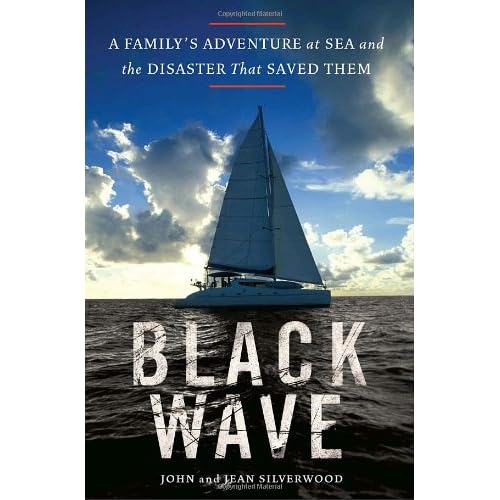
Captain's library log, January 3, 2011: I am 3/4ths of the way through their book Black Wave (it's remaindered in paperback), and rarely have I cycled from anger to sympathy so quickly. I haven't sailed these waters (although we intend to), but even I know that they are incompletely charted, sometimes inaccurately charted, and that a watch and loads of offing should be maintained at all times. Not just for the reasons of reef avoidance, but because I imagine that storms regularly blow shallowly rooted palm trees into the ocean. Hitting one could ruin your whole day.

January 4, 2011: Ah, a variant on the old saying, "if you can't be a good example, you'll have to be a horrible warning". The gory, god-ridden saga of Black Wave continues, although I am not finding it restful.

There does seem to be a divide between the cruisers/voyagers who rarely have problems (and if they do, they are largely resolved by the skipper and crew without a lot of shouting) and those for whom sailing is lurching from one crisis to another, spewing money and unhappiness like ladled chum into hungry waters.

But a silver lining? Nobody comes to sailing with a lifetime of shoreside competence and rationality only to lose it upon weighing anchor. People lacking in the qualities ocean sailing demands merely transfer that lack from dry land to salt water. I'm not saying that is necessarily the case here; the skipper "grew up on boats" and seems to work the sails and helm properly. But there are many instances where he seems defeated by the boat's engines and balky gensets, electronics, etc. and has to pay others...heavily...to fix them...poorly.

This wouldn't be the first instance of a "1970s sailor", who is well able to work with consummate skill a Windex, the winches, the Whale Gusher and the compass on a 30-foot coastal sailboat, being defeated by the intimate and extensive technical knowledge required to understand, never mind maintain, a much larger, far more tricked-out modern cruiser. I myself am still making that transition, and am concluding that the Luddites were onto something, despite the fact that I am conversant with many technologies and generally don't require help to get past the welcome screen.

So it's possible that Black Wave's boat-show-bought radar wasn't on because it didn't occur to anyone aboard to turn it on...or how, once on, the guard function wasn't activated, or the XTE function on the GPS worked, or even how to run a simple plot that would have revealed a fatal drift into danger.

Maybe they'll be an answer in the last part of the book, but so far, it's comparing their wreck to that of a brigantine 150 years ago that stranded in practically the same spot, a comparison I find specious at best. If that known reef is so goddamned sneaky and barely visible, why run so close and at such a speed, at night? Is this the family version of Rule 62?

January 5, 2011: Still doesn't really explain why no radar, no deck watch, no generous offing.

I finished the book last night. The last section is somewhat better than the first, but it's still more drama than sense.

January 6, 2011: Getting into debates in online forums about this book, which some sailors find "inspirational" in a way I find inexplicable. I am coming to the conclusion that for every Luddite skipper who figures Morse code, signal flags and the ability to tie a sheepshank will see him through (and not all of these people are necessarily old; some are "purists" and/or hopelessly romantic), there are others who see sailing as a big video game with somewhat more sunshine and fresh air.

Tying in the autopilot to the GPS...while convenient...is certainly symptomatic of this, as we see more and more frequently bad accidents from either failing to notice something isn't working, exhibiting too much faith in charts either in error or outdated, and simply failing to look around the boat.

The result? Boats come to rest on the piers built last year that simply aren't noted on that bargain circa 2007 chart collection you traded for a bottle of rum at the last raft-up. Your course is west in the afternoon, and yet the absence of the sun in your face and the old magnetic compass you haven't bothered to swing and which is reporting "90 degrees" goes unnoticed, because the NavNet says "270 W" in large, daylight-visible screen font. And the NavNet cost four grand and is even in "3D", like Avatar, so it must be right...right?

So we are like chimps confronted with common hand-tools and delicious nuts to crack. The old chimps just keep biting, because that used to work when their teeth were better and more numerous. Other chimps waste time and cut themselves using screwdrivers and hacksaw blades. Only the chimps who have used the right-sized rocks are going to figure out that a hammer is a right-sized rock with a lever attached.

The trouble is, of course, that either the old salts or the electronics-addled new sailors might both need rescuing from their lifestyle choices by the competent sailor who understands his tools and the limitations of those tools. If I put an Autohelm and a GPS in your car, and a few actuators, would you leave the driver's seat and have a nap in the back? And yet this is perhaps one answer to what happened to Emerald Jane, the honking big cat destroyed in Black Wave (why does the title imply they were flipped in the ocean? They were crunched on a reef they hit near full speed. "Black wave" of nausea, perhaps, because all this was avoidable.).

I just spent an hour devising a fuel polishing system with my diesel dealer this morning with exactly this in mind. He asked why I was installing a FilterBoss and separately filtered cross-transfer pump and Baja filters at the deck fills, and various other amenities, like running all tank vents to goosenecks high on the cabin, for offshore work. I said that a wise sailor once noted that contaminated fuel caused engine problems One, Two and Three in his experience, and the diesel dealer agreed that he found this all too often, as well. I said that with 50 feet of fuel hose, I could offer "Remedial Raft-ups", do fuel polishing for other cruisers, and thereby barter for the things we needed. He said that given the lack of knowledge with which some cruisers go to sea, ideas like that could pay for the trip!

Back to Black Wave: The book is also sloppily edited and the wife does most of the telling in ways that annoy the sailors in the audience, such as calling stays and shrouds "lines" and repeatedly describing the height of the mast as "eight stories", (should be, of course, "storeys") instead of in feet or metres.

I haven't finished it, but I don't expect to find the words "I should have kept a watch instead of dicking around with the gooseneck" or "I should have hove to/set a sea anchor/noted drift". There's a lot here that's reasonable about family tensions, but the skipper is described as a recovering alcoholic who dewagons on the first part of the trip, and who seems to have difficulty with focusing his concentration.

Perhaps he didn't think about how fast a cat could close with an atoll?

Didn't mean for this to be a book review (but now it is a book review, of the "stay away" variety), but this tragic tale got on my nerves. The story of the 1994 Queen's Birthday weather bomb, by contrast, provided a lot of good survival tips and frankly, a lot less "shallow waters".

January 23, 2011: It's been two weeks of quite cold winter weather. The Boat Show came and went, with lots of nautically themed tumblers for sale and not a lot of safety gear...par for the course. I find myself still pondering Black Wave. This book made me quite annoyed. Like howling in exasperation and chucking it across the room annoyed. I only recommend it to people who enjoy the sight of head-on crashes with drunken driving as the cause. It inspired me to always keep a deck watch...so I can avoid auto-piloted boats in the loosely charted South Pacific who pick sunset as a good time for everyone to go below and watch a movie.

These people lived IN SPITE of what happened to them. I finished this book two weeks ago, and my feelings have hardened even more, and I found the whole "drama" aspect to be written with an eye to securing a movie deal. Also, as an aside, prayer is no substitute for seamanship.

I hope the authors learned something. I did, but it wasn't really a good thing.

2011-01-02

The line on the *first* "Great War"


Like many a social sailor, I've long had a fascination for the professionals, whether they be the fighting Jack Tars of the Napoleonic era, or even today's merchant navy personnel, who, like my late father in World War II, seem to once again in many places be facing violence to their ships and their livelihoods.

Having devoured a few shelves of Kent, O'Brien, Forester and that ilk, I feel a particular fondness for books that deal with the over two decades of worldwide struggle between France's revolutionary and subsequently Napoleonic rulership and Britain's tottering establishment in concert with a series of "subsidised" and often defeated allies in Continental Europe. South African-born Canadian journalist Noel Mostert has done a remarkable job with The Line Upon a Wind (sample pages here) in both contextualizing and deepening a story I thought I knew: how the Royal Navy flirted with the odds, mutiny and the incompetence of many senior officers to keep Napoleon from utterly dominating Europe. Mostert, who states that contemporaries referred to the 22-year struggle as "the Great War" (something I didn't know, having always heard that term reserved for World War I), finds much to admire with the British navy, and much to condemn in its brutal discipline, its stale tactics, its sanctioned jealousies and its almost institutional arrogance, particularly after the victory of Trafalgar essentially finished "big ship actions" and proved that the way forward was in smaller, more nimble frigates.

Mostert relates, not entirely without relish, how it took a fairly one-sided thumping from an enemy...the United States...considered not very seriously when considered at all to realize that a fighting spirit, easy access to the grog and the finest collection of sea shanties would not, in fact, beat sailors as good as the British fighting in newer, technically superior ships. Time and again Mostert reminds his readers how much the British success (which was by no means consistent or properly exploited) was bought with men's lives, men who spent literally years at sea without stepping ashore, men who, inevitably, mutinied or deserted, even to the French, to escape lives too miserable for the Admiralty to generally acknowledge, never mind remedy. The connection between the appalling conditions and capricious commands aboard and the high rate of desertion in the Royal Navy was not easily established until, it seems, near the end of the war, and even then, "tradition" held too many official attitudes in thrall to the legacy of the "Articles of War".

Mostert's doorstopper shines light into corners less known: the run-up to war, the rapidly changing economics that fattened merchant pockets as it bankrupted governments, and the chaotic inability of the Jacobins to use their better ships using new tactics...proving, as did Stalin, that killing a large part of your military officer class tends to strangle initiative. His Canadian background comes through with a focus on the "War of 1812" when the lakes I sail on were the scene of a forest-backed arms race to get ever larger warships built on stretches of water without today's locks to move them up or down the chain. "Fleet actions" on Lake Ontario were intense, but brief; neither side could dare alter the balance of power when one hundred soldier in front of the right isolated fort could secure Spain-sized chunks of wilderness, along with varying numbers of native allies or enemies.

Best of all, here, however, is not just the focus on battles and tactics, but the perceptive takes on the personalities that the Royal Navy nurtured, sometimes in spite of itself. Nelson and Napoleon are seen, even after Nelson's almost inevitable death in 1805, as brothers in spirit while enemies in arms, and receive a lot of attention. Less well-known names, however, like Codrington and Hoste, get a full discussion, and their inventiveness and daring became a hallmark of why the British prevailed in this conflict despite, as the author lists, a daunting number of reasons why they should have fallen before old Boney like millions did before them.

This is a great companion piece to Arthur Herman's 2004 brick To Rule the Waves: How the British Navy Shaped the Modern World, but simply isn't quite as well written and cannot, due to the far greater time span covered, drill down so exquisitely into the pulp of why Britain with its rotating cast of semi-competent politicians and mad/bad royalty, its dubious financing and alliances and its frequently compromised ships kept the French bottled up in their ports, like furious bottled wasps unable to wield their stingers. Very much recommended.

2010-12-06

Capturing the cruising couple dynamic


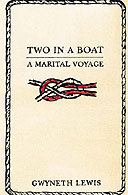
I came across this story of a superficially mismatched Welsh couple's attempt to take up the cruising lifestyle by chance, and was surprised and gratified that it captured what I understand (admittedly ahead of time) to be the challenges of setting off on long-term cruising where husband and wife are co-skippers.

Author Gwyneth Lewis was the National Poet of Wales, a position I would have suspected to have existed, but which did not exist, apparently, until recently. She is also a clinical depressive in (mostly) recovery and is a recovering alcoholic, as is her considerably older husband Leighton, a fit but fury-filled former merchant seaman with a great deal of experience in boats, but not, significantly, of sailing them.

In Two in a Boat: A Marital Voyage, the bookish and self-doubting Lewis recounts accurately the transformation of the couple's marital dynamic from one of parity to one in which Leighton is referred to as "Captain Bastard". Now, an account such as this could be hard slogging, but Lewis's dry wit and sharp honesty about her own nautical shortcomings and (perhaps) too tender feelings concerning her husband's impatience with said shortcomings, is very revealing and says much about the moving needle of the cruising couple dynamic.

The "Captain Bligh" effect is well known in the cruising community, and many a discounted, fully-fitted yacht is available at Gibraltar, Panama and other cruising bottlenecks around the world's seas due to it; these boats are forlorn, floating testaments to ongoing divorce proceedings as wives and husbands pass the breaking point over life aboard. It seems, time and time again, that you can have dodgy amenities, bad weather and cramped, damp saloons, but if you have a screaming male skipper, it's time for most women to demand to be let off the ship.

Why, however, do skippers scream?

To her credit, Lewis does not look for easy answers, and she is frank about her inexperience. She (rightly, in my view) ascribes husband Leighton's growing irritation to his fatigue and the realization that even as he is the alleged "voice of experience" aboard, his own considerable skills are neither always sufficient nor always applicable to the problems...and they are legion...thrown at them on their journey from Cardiff to (after many disheartening setbacks) North Africa.

Lewis has brewed here the sort of "nav station psychology" that will strike a chord of recognition in any cruising couple. She offers a few solutions by way of understanding, but she is quite clear on how damaging and corrosive the cruising life can be to boat-bound marriages. In the end, it is a crisis of a different kind that brings them back together on the same course, if on a different map.

On a personal note, Lewis has quite a bit to say about Wales and Cardiff, a city where my father was born and where I still have family. Her husband's first year as a teenaged merchant seaman occurred in the last year in which my father was at sea, so there are several references and parallels I "got" that others may not. Some reviews of this now-five-year-old book have apparently found it a "downer" due to descriptions of salt-water bickering and the depression brought on by thieving mechanics in foreign ports...but this, too, is sailing, and Lewis does a great service by forgoing the brightwork and giving an unvarnished, beautifully written account of a marriage at sea that I finished in one go. It's a cautionary tale, to be sure, but it is far from a horrible warning.

Now, if I can only get my wife to read it!

2010-10-31

Let the sea make a rude noise


It's not hard to find history books on how trade, fishing and exploration of the Atlantic Ocean transformed Europe from a Dark Age backwater into a proper hub of civilization. Less easy to find are non-specialist histories of the North Pacific (itself bigger than the Atlantic ) that delve into the shorter (in terms of written records), but no less complex story of how such an initially unknown...and frequently unknowable...quarter of the planet held in thrall the hopes and dreams of many countries. Walter McDougall's Let the Sea Make a Noise: A History of the North Pacific from Magellan to MacArthur addresses that shortfall in a quirky, if ultimately compelling, way.

This is an unusual book in several respects. Firstly, it covers the history of a part of the planet most people would consider more or less a void: the North Pacific. Secondly, it convincingly demonstrates that the various cultures and peoples both within and on the periphery of that vast oceanic expanse all had dreams of empire that saw the North Pacific as key not only to securing uncountable riches but permanent advantages over their rivals in the empire-building trade. Lastly, this book uses...mostly successfully, I think, a fictional chorus of long-dead historical figures to exemplify their respective cultural viewpoints and to critique subsequent events.

It is this last device of the author's that many will find either delightful or distracting, intriguing or too cute by half. Certainly, the endless machinations of the British, Americans, Russians, and Japanese in the 19th and 20th centuries to secure, populate and exploit the shores and islands of the North Pacific, and to extract commercial concessions from conflict-wracked...but still too large to dominate or colonize...China, could make for confusing reading were it not for a bickering set of kibbitzers to pass judgment on events and policies which, in life, they would have had no knowledge.

These characters do not simplify the historical record as related on the pages of what is, after all, a doorstopper of a book that covers over 400 years and a dozen countries: They do, however, provide a context and certain points of view that, like those of Queen Ka'ahumanu of Kaua'i, that can only be imagined in the context of rapid cultural change.

Perhaps the most surprising aspect of the book is the depth of the racism prevalent in the societies of all of the "major players" in the 19th and 20th centuries (or at least, until the close of the Second World War). The racist assumptions of superiority of the colonizing powers over any and all "natives" are generally well-known, but the appalling opinions of the Americans and the Japanese over what each regarded as its "inherited fitness to rule" over others are like reflections in a funhouse mirror, and a case can be made that one of the reasons a fanatical and nationalistic clique of military leaders essentially "undemocratized" Japan in the lead up to World War II is that a significant portion of Japanese society got tired at the gall of the so-called Western powers at denying Japan its own empire in China when the rest of the world had been so readily carved up by Caucasian colonizers. That and the near-constant visceral fear and hatred expressed by many of those same Westerners (and including their political class) for any emigration from Japan to the so-called "Anglo-Saxon democracies". More than once, I stopped and shook my head as yet one more citation of almost casual and even quasi-scientific racism appeared, to linger like a fart in an elevator heading for the basement of subsequent events.

I mean, it's one thing to suspect how prone people of three to five generations ago were to jingoism and racism, but it's quite another to see how large a role poorly construed racial assumptions about other nationalities played in diplomacy and government policy. Even those who were less ignorant of "the other" tended to cave in to the baying hounds of an incited public led by crass appeals to baser instincts from the press of the day.

Maybe not that much has changed after all.

Anyway, McDougall's book, while tiring on the arms (consider NOT reading this in bed), is an excellent exercise for the mind, and gives me plenty of context for visiting, as I hope to do, the North Pacific by sailboat sometime in the future.

2010-10-25

Pride goeth before the wind


Pride of the Sea
is a compelling account of the intersection between civic boosterism, marketing, boat design and nature, and how the needs and contingencies inherent in each interest can skew, in this case with deadly consequences, what might have been remedied or avoided entirely.

Baltimore-based author Tom Waldron relates in a simple way a complex story of how a replica of a circa-1812 Baltimore Clipper went from one man's pitch to a 1970s-era civic government eager to promote a failing small city to an actual and (as it turns out) all-too-authentic sailing vessel.

Pride of Baltimore was originally conceived as a static display to lure tourists to the decaying Baltimore harbour. Designed to be much as the original fast, heavily canvased schooners of 200 years past as possible, despite the poverty of blueprints or other design elements that would show how such boats were actually constructed, Pride would be ineligible for U.S. Coast Guard certification, lacking the water-tight bulkheads or stability aspects that make even the most delicate-seeming of today's sailboats inherently more seaworthy than almost all "historical tall ship" designs.

Nonetheless, Pride plied the seas as a sort of floating goodwill ambassador for Baltimore, manned by a hired, if ill-paid, crew who moved about the international fraternity of tall-ship sailors. This fraternity had, rightly as it turned out, reservations about the safety of Pride, which had for all its apparently excellent sailing qualities that mimicked, as close as could be evaluated, the original "clipper" experience, and yet also was a noticeably "tender" ship that had given in its nine years of operation signs that a strong if not excessive wind could send her over, not to come back again. Even her skipper, a cautious and observant sailor, to judge by the letters quoted here, would challenge the assumptions made by the civic managers of Pride and by her designer as to her ultimate suitability as an ocean-going boat.

I needn't foreshadow anymore...you can guess what happened. Tall ships with internal ballast and massive pyramids of sails have beauty but not always physics on their sides, and as the less-tragic if no less dramatic sinking of the modern-designed Canadian sail training ship Concordia earlier this year indicates, they can be sunk, and quickly, in rare adverse weather conditions. It was a suspected microburst that doomed Concordia, and a similar event is suspected to have doomed Pride: Whether different design or ballasting or operational choices would have prevented these sinking remains an open question.

"Tall ships", whether saved from the breakers or built with modern ideas and materials, continue to exert a romantic fascination with the general public and with recreational sailors alike. I myself stood upon the deck of Pride of Baltimore II this summer; I like tall ships and I like the idea of young people sail training at sea. A book like this, however, reminds us that the sailors of the past worked in conditions and on craft far more dangerous than we are prepared to tolerate today, leading to some hard questions about the feasibility of having such ships ply the waters of the world on behalf of tourism and marketing when the sea, as ever, remains capable of swatting them beneath the waves in a matter of seconds.

2010-09-06

A forceful nature


The tough old bird pictured above was the first man to sail non-stop, alone, around the world. He did it when a fair portion of you reading were likely unborn or at best, falling out of your water wings at the wading pool. Then he did it again in 2007 at the age of 68 in an Open 60, the oldest ever competitor in the Velux 5 Oceans Race. He's Robin Knox-Johnston, and despite my republican tendencies, I would be happy as hell to call him "sir".

Read this if you want to understand the type of mind that thrives best at sea: a perfect balance of methodical and adventuresome and instinctual.

Knox-Johnston chides himself for not preparing well enough, for starting late, for spending far, far too much time fiddling with balky electronics and cryptic comms devices, and for perhaps having the wrong motives in leaving at all, so recently after the death of his wife from cancer. And yet he is clearly most fully alive at sea, and his deep seamanship, honed by years in the British Merchant Marine and the Naval Reserve, keeps him safe and still moving when other, arguably better equipped and race-ready competitors fall afoul of weather, tactics or gear failure.

You, and most certainly I, will never ocean race at this level, and nor would many of us want to, but the lessons available to even the weekend sailor from Sir Robin can illuminate and improve anyone's messing about in boats.

2010-08-02

Pro tips from the amateur's naval architect


A particular interest of mine is the care and maintenance of metal sailboats (see my other blog). Many, many of the things have been designed by the author of this bluntly titled work, Bruce Roberts (the Goodson came later). Mr. Roberts' designs are famous and/or notorious, because he's one of the best marketers of selling them to the general public in the last 30 years. Seriously, if it's homebuilt, looks wonky and sails like a bag of rocks, it's likely to be a Roberts design. No slag to the esteemable Mr. Roberts, merely that the "outsourced" nature of his career means a lot of guys who can't fold napkins are cutting and tack-welding steel using his plans.

My own steel pilothouse cutter, which admittedly looks like a Land Rover on a chine hull, albeit a very cleanly executed one, has been queried as being a Roberts design more than once. It is not. It looks more like a Ted Brewer or a Dutch design, actually, and it sails quite well for its hull form and displacement.

Stating that a lot of Roberts boats are crap is not to blame the man, but the method: Roberts' designs are conservative to start with, and by conservative I mean "potentially slow" and "easily made too heavy". This is because a lot of fellows in the past few decades have welded together from his plans pretty amateurish efforts. I estimate that one out of eight completed Roberts designs I've seen (and far from all are completed in the usual sense, as many weekend shipwrights give up at the bare hull stage) are done in the way Roberts intended. Still, as they say, the problem with democracy is that everyone gets a vote, and undoubtedly, Bruce Roberts' life work has brought boating, and even occasionally a decent boat, to the masses of folk who otherwise would never have attempted to construct their own yacht..

That's why when I was reading "Metal Boats", a 1998 cover-all-bases primer (pun intended) on all things floaty and metallic, I thought, perhaps uncharitably, that this book should have been handed out free with the lofting plans of Roberts' most popular designs, fewer of which would be rusting away, never to be completed, in the lonelier ends of the world's boatyards.

Using his own designs and finished examples as the basis for his commentary, Roberts shows in this book a deep understanding of the topic the sharing of which would be valuable to either the aspiring builder in steel, aluminum or something more exotic, or, like myself, the owner of something already decently built who wishes to keep it that way. Along with fairly methodical breakdowns of the construction process (and how to avoid the pitfalls of the first-time boat builder in metal), useful chapters on corrosion avoidance, electrical systems and tankage outline considerations peculiar to the metal sail or power boat. Oh, yes, Roberts does big metal power boats as well, and he very much hopes you will, too.

Profusely illustrated, if indifferently edited as perhaps is to be expected of a book with a limited potential audience, Metal Boats is a rare find along the lines of Nigel Warren's Metal Corrosion in Boats, which I'll review in the future. Like the boat repair compendiums of Nigel Calder (why are so many boat fixers called Nigel?), it belongs on any sailor's shelf, if what she sails goes "ping" and not "thud".

2010-04-22

Seaflower: A reasonable fascimilie of O'Brien and Forester


I thought that I would kick this blog off not with what I was intending, which were hard-nosed critiques of sailing and cruising manuals, guides and related "hard" non-fiction, but with a Good Read.

While it is undeniably true that circumstances (see www.alchemy2009.blogspot.com) demand that I spend much of my reading time devouring technical manuals, marine catalogues and weighty tomes on the finer points of galvanic corrosion, I do try to unwind with a nice story now and then. I expect that my fiction to non-fiction reading ratio will return to the 50/50 point I had until my thirties (as opposed to 95:5 in favour of non-fiction now) when we go cruising, as my impression is that most cruisers, who tend to be avid readers, veer toward the lurid paperback over the Booker Prize winners, because if the former feeds the fish in error, it's no great loss.

Now, sailing stories were, apart from Conrad, not on my fictional menu prior to starting with the real thing in the late '90s. In fact, it was some time before I mastered the rather esoteric and often rude-sounding language of the parts of the boat, along with the fifty or so "nautical verbs" one needs to precisely indicate one's desires to crew on a moving boat in heavy air. I am remarkably common in this regard in having part of my education painlessly supplemented by the 20 "Aubrey-Maturin" novels of the late Patrick O'Brian (http://en.wikipedia.org/wiki/Patrick_O%27Brian), who, along with the even later C.S. Forester's "Hornblower" series (http://en.wikipedia.org/wiki/C._S._Forester), is put in the top rank of novelists mining the rich and seemingly unexhaustible vein of Napoleonic war plots.

I suspect the vein is so rich because the Napoleonic period extended some 20 years, involved dozens of countries great and small, played out more or less around the world, and at one point involved the young if feisty United States versus Great Britain, a country approaching its apogee of imperial power and political and military influence, despite being severely overextended in the process.

The strong arm of Britain's influence was its large and well-trained navy, which overcame defects both structural (the rigid hierarchy that allowed seniority and not merit to secure promotion) and scientific (appalling food and ignorance of scurvy prevention) to secure victories on an almost regular basis. Controlling the seas meant controlling the trade on it, and that's a dramatic way to establish dominance.

Add to the historical facts of the Napoleonic Wars the ample supply of primary materials from the circa 1800 bureaucratic archives, and the historian-novelist can pad out a cracking good yarn with shovelfuls of jargon and background facts that put the reader squarely, or square-sailedly, in the past. The mark of the well-written historical novel, particularly of this well-documented period, would seem to rest on casual reference to obscure knots, the composition of forgotten soups, the proper way to service a musket, or in-depth descriptions of horrendous medical procedures and treatments we now know to be poisonous. The effect leaves the reader feeling that the characters were very brave, but hopelessly ignorant, which, given for instance the difficulty of co-ordination even the most simple actions on a ship of the line, is somewhat ironic. Knowing how to text rapidly would avail one not during a "hot action" between frigates, and a rapid ability to amputate would be a blessing in a world without anesthetics or antibiotics.

Seaflower, the third entry in a series centered on the adventures of Thomas Kydd, a "landsman" impressed, which is to say legally kidnapped and forced to serve in the British Navy, is by Julian Stockwin (http://en.wikipedia.org/wiki/Julian_Stockwin), a writer with the appropriate naval background and salty-looking beard. Stockwin has cranked out ten in the Kydd series, with an eleventh on the way, and seems to have started once Patrick O'Brian was safely dead. While that might seem harsh, to say that there are similarities between the two series of novels would be understating the case. While O'Brian's Jack Aubrey was a clever, if somewhat impulsive and uncouth, member of the English landed gentry, Thomas Kydd is of the lower classes, who nonetheless finds both opportunity and abilities beyond expectations in the Royal Navy. The most glaring, to me, attempt to ride the coattails of O'Brian is in the character of Nicholas Renzi, a mysteriously cultured swab with secrets aplenty who, in my eyes, resembled a lower-decks version of the ship's doctor/part-time spy Stephen Maturin, the most interesting character in the O'Brian series thanks to his intelligence and insight to the brave new world of scientific inquiry.

Another cavil is the extensive use of what one might term dialectical orthography...the attempt to reproduce various accents and idioms in print. While the occasional "ye blatherin' swab" or "top o' the mainmast, cap'n" lends a certain Pirates of the Caribbean savour to the text, I found wearing the endless stream of apostrophes indicating various dropped consonants. Reading Kydd's "y'arrr" utterances, I started looking for the accessorizing parrot on the shoulder shouting about pieces of eight. Forester, O'Brian, Kent and Cornwell use this sort of thing sparingly, and the story reads better for it, I think.

As for the story, it's certainly eventful: Kydd is shipped out for political reasons to a "sugar island" in the Caribbean for service on the cutter Seaflower, a small, cramped and minor warship that nonetheless finds the requisite "action". Mixed in with this are interesting descriptions of how the Navy was kept in repair and supplied at a typical depot of the time, a bit of sex, lots of war and intrigue, including episodes showing how the British Army and Navy managed to co-ordinate their actions, and a good description of the sort of actions one must take to avoid death in a hurricane.

Stockwin's no literary stylist: This is a straightforward, large-print page-turner propelled by the regular appearance of something going boom or squish every few pages. It's derivative of its predecessors, and its betters, but not painfully so. The meat of the tale is well-salted with historical oddities and asides, and it's clear homework has been done. Would I read the other Thomas Kydd tales? I would respond with a qualified "probably". The Aubrey-Maturin stories spoiled me, because O'Brian used the Napoleonic Wars to explore questions of comradeship, loyalty, politics and betrayal as much as he banged on about Stockholm tar, the heft of a boarding axe, and the proper way to lash down a spanker (I told you sailing was rude). Stockwin's not in this class, and he's not as good with the somewhat dull Kydd as Alexander Kent is with his Richard Bolitho character or Bernard Cornwell is with the complex and equally "from the ranks" Richard Sharpe.

But with a rum-based beverage at hand, gently swaying in a tropical breeze in a hammock slung over the foredeck of a well-found cruiser? Sure, I would happily consume another Kydd adventure like a Harlequin romance in a haze of twelve-pounder smoke and the crunch of ship's biscuit in my ears.