2021-01-08

Does this fish taste slavey to you?


The Outlaw Ocean: Journeys Across the Last Untamed Frontier

by Ian Urbina, Knopf 2019

ISBN 0451492943 (ISBN13: 9780451492944)

It's difficult to convey to the average non-sailor the immensity of the seas; once out of sight of land, or "off-soundings" in sailor talk, it's easy to lose one's way, and the farther from traditional shipping lanes one wanders, the lonelier the sea can be. It is also, as Ian Urbina suggests in this troubling survey of oceanic criminality, a great place in which to disguise evil deeds. From renegade dumping of toxic waste, labour practices bordering on slavery, illegal fishing that is robbing the seas bare of critical fish stocks, Urbina has catalogued the lot, as well as the generally weak attempts of land-focused governments to police the seas beyond their territorial borders, and which the author convincingly argues are the greatest example of the tragedy of the commons in human history.

Since arriving in Nova Scotia (we are having our sailboat serviced at a nearby shipyard), my family and I have become more aware of the fishing industry and how much expense, labour and management are required to keep a biological resource, such as lobster, shellfish and wild (as opposed to farmed) fish, viable and renewable in the face of illegal "harvesting" and often challenging, when not appalling, conditions. But even in Canada, a first-world country of great riches, we haven't been able to curtail greed for fish in favour of the survivial of fish.

“This fantasy that it is possible to fish sustainably, legally, and using workers with contracts, making a living wage, and still deliver a five-ounce can of skipjack tuna for $2.50 that ends up on the grocery shelf only days after the fish was pulled from the water thousands of miles away. Prices that low and efficiencies that tight come with hidden costs, and it is the manning agencies that help in the hiding.” -Ian Urbina, The Outlaw Ocean

But Canada has the resources to control, insofar as it is willing to defend its oceanic borders and possesses the wealth and will to do so; as Urbina points out, many countries do not have these advantages, and the combination of lax enforcement, corruption at various levels of local and national governance, the ability of larger countries to build more and larger fishing boats, and the wasteful practices of an underregulated international fishing industry, such as the concept of bycatch and the destructive seine-netting and bottom trawling are stripping the once-bountiful oceans bare of life beyond plankton and jellyfish and are collapsing the natural food order worldwide.

Urbina, who writes as an investigative reporter for The New York Times and The Atlantic magazine, is unstinting in his analysis of the appetite for sealife, and for the opportunities the vastness of the oceans offers to criminal behaviour. Illegal fishing using essentially captive crews, who are either tricked into servitude or are effectively indentured, sometimes for years, by debt in populous, poor places such as Thailand, Indonesia and Cambodia, is seen by Urbina as endemic and an essential way to deliver, if not for much longer, the animal protein fish represent to the teeming billions of human mouths across the planet, as well as to the plates of far richer gourmets in the developed world, those countries who, like Canada, many have overfished their own waters but are not above looking the other way when a nice cut shows up at the fishmonger's with hazy provenance.

I won't even discuss the ecological horror and deep stupidity of shark finning, save that Urbina argues that a live shark is exponentially worth more alive to a Pacific atoll nation than as a dubious status symbol at a Chinese wedding.

So, not a happy read, but a very informative one that may make the reader question not only what is on her plate, but how it got there and what degree of suffering and short-sightedness was necessary.


2020-04-03

More than one warm line

Any resemblance to the "Permanent Crimson Assurance" is purely coincidental.
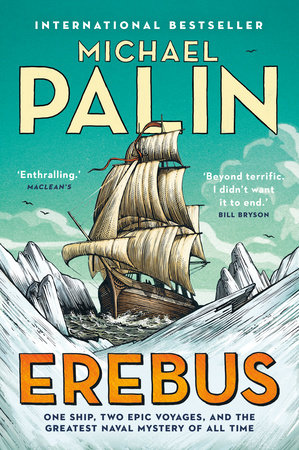
Well, having been ashore a bit this winter and having a considerate Admiral Wife who has good taste in books, I've had time to read some watery books of late. "Erebus", by travel documentarian and ex-Python (Sir) Michael Palin, fleshes out, no pun intended, one of the more dramatic episodes of the 19th century Age of Exploration.

While not an academic work, it's an entertaining one, and the basic story of Sir John Franklin's ill-fated final attempt to find the Northwest Passage is back-dated to the evolution of the Royal Navy in the post-Napoleonic period and the construction of the ship Erebus as a vessel made to fling bombs at shore installations. At just over 100 feet in length, Erebus was not large, but she was built immensely strongly to bear the forces of her armament. She saw little action in the largely peaceful decades after Waterloo, but Britain's Empire and commercial consideration gradually enlisted, according to Palin, an underutilized Royal Navy into the cause of exploration for its own sake.

Erebus was therefore further strengthened (with wood, naturally), and, under the command of Captain James Clark Ross, an almost stereotypically dashing and handsome specimen who, fortunately, had deep seafaring skills, the heavy and slow sailing ship, along with the equally ponderous and slightly smaller Terror, attempted to reach the South Magnetic Pole over several seasons, starting in 1839.

Palin is very good here and indeed this part of the story, being well-documented  thanks to both ships returning, battered but intact, to tell of their adventures. What shines besides the sheer skill of wind-powered, wooden ships attempting to maneuver in Antarctic pack ice are the various personalities of the officers (mostly, as the seamen were rarely expected to journal, if they could write at all) and how the stresses of their mission's goals, along with the nature of their disparate personalities, led to outcomes that might have otherwise been avoided. Captain Crozier, of the Terror, for instance, seems to have had an unwarranted inferiority complex that did not allow him to further his own career in situations, such as the search for the Northwest Passage, where he had greater experience and, likely, skills, than Franklin, who was comparatively old for the job and was seeking redemption of his own reputation for a disasterous governorship of Tasmania.

Palin's skill as a writer is in contrasting small moments on ships distant in time and technology with the larger thrust of an optimistic society trying to reconcile a rapidly modernizing economy with older notions of class divisions and military habits of mind. Science was not the purview of professionals as it is today; the captains of these ships had to be very up-to-date in a variety of areas as they were attempting to establish facts, such as the shape of the earth's magnetosphere, with basic instruments in difficult conditions. That is the real story of "Erebus", and Palin tells it well, and, not unexpectedly, with a leavening bit of humour here and there.

Of course, Erebus and, eventually, Terror, were found off King William Island in Nunavut in 2014 and while we are never likely to know precisely why the crew attempted, tragically, to walk south to Hudson's Bay outposts hundreds of miles away, we can, thanks to Palin's writing, get a sense of who such explorers were and why they, mostly cheerfully, spent years boldly going to the ends of the earth.


2014-03-14

Ninety percent of interesting

Ironically, this book arrived by truck and then by foot.

Note to regular readers: This book review has been cross-posted to my "boat refitting blog" The World Encompassed.  I feel the subject matter, particularly in light of the effect of world shipping on little affluent yachties crossing shipping lanes because it's fun to be on a boat, may be of interest to sailors...and, or course, those readers who are also sailors.

To the average, non-mariner citizen, how the shelves at their local Walmart (or slightly less proletarian vendors) are stocked is of little interest. There's underpaid people in the front and presumably tractor-trailer docks at the back, the denizens of which labour in obscurity to bring consumers their discount-priced crap.

Rose George begs to differ: In "Ninety Percent of Everything", she gives (to me, anyway) a compelling recap of the "invisible" industry of global shipping, which has been revolutionized both by the internationalization of shipboard labour and ownership, and the related decline of national merchant navies, and the near-total acceptance of the container as the "base unit" of world shipping.

It's getting crowded out there.
In her engaging book, George, a British journalist with a number of non-fiction books to her credit, takes passage on M.V. Mærsk Kendal, a fairly representative sort of modern container ship, 300 metres long and 40 metres across, and capable of carrying 6,200 TEUs or about 3,100 of the more commonly seen (when noticed at all) 40-foot standard shipping containers.

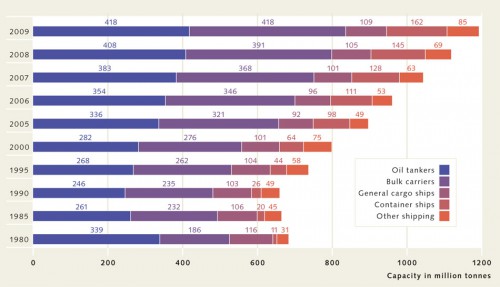
Rose recounts how world commerce got here, and how the shipping container, after much industry resistence and vast investment to alter the world's harbours, became the de facto standard for the transshipment of manufactured goods. While raw materials, grains and liquids are shipped in different types of ships, and while container ships are not, in terms of the world's shipping fleet, particularly numerous, they are often the most noticeable, and, unlike tankers or bulk carriers, those containers can and do fall off. George relates that while only 6,000 out of 100,000 vessels of the world's merchant fleet are container ships, there's no point in building them small as their economies of scale dictate that the price of moving a container's contents (already ridiculously tiny) is reflected directly in how much of it can be hauled in one go.

The diesel engine of M/V Emma Mærsk:You know that when your engine requires sets of stairs, it's pretty big.

Speaking of economy, shipping is the greenest way per capita to get goods halfway around the planet. Having said that, however, the capita of shipping is so large, and the typical low-grade fuel they burn so dirty, that it's estimated that just 15 of the largest ships emit soot to rival all the world's cars.


Eager to concretize George's data in terms I could appreciate, I ran some figures for M.V. Emma Maersk's monster house-sized Wartsila Sulzer RTA96-C diesel engine when compared to my own wee diesel. Now, to be fair, I run standard diesel of the rather clarified, low-sulphur type used in cars and trucks, whereas most ships, including most cruise shipsburn a tarry substance known as bunker fuel.

Guess which one is more polluting?


Emma Maersk's most economical fuel consumption is 1,660 gallons of heavy fuel oil per hour. Let's say "Imperial" or "U.S." gallons don't really matter here. That's 0.260 lbs/hp/hour, according to the manufacturer. My Beta 60, by contrast, burns 4 litres/hr at 2,000 rpm. So pushing Maersk around combusts roughly 0.5 gal or  1.86 L of fuel per second, whereas Alchemy is more like 1 mL/sec.
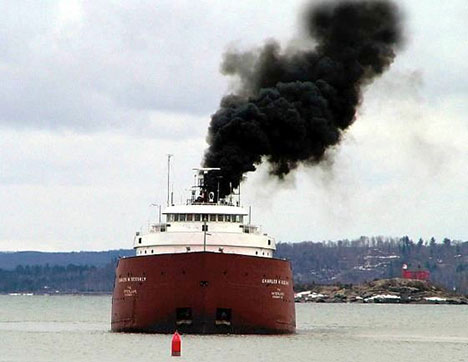
Oh, buoy, that's a lot of soot.

What bollocks, of course: Alchemy is a 16 tonne, 12 metre sailboat fit to carry perhaps four souls and two tonnes of fuel, water and provisions. Not to mention that Alchemy's diesel is an auxiliary, and, unlike that of a container ship, is not required to run for weeks at a stretch. All of which is true, but the reason that ships use low-grade fuel of high polluting potential is the same reason they hire (when they hire) crew out of the developing world: it's cheaper to do things that way. And price, like most human commerce, is the break point of doing shipping at all.

Speaking of the developing world, George spends a lot of time discussing the blend of opportunity and plight facing the most numerous members of world shipping crews, the Filipinos. She notes it's a blend, because, just as the women of the Philipinnes seem to have self-exported themselves to the Wests in the form of nannies, nurses and caregivers, that country's men are found as the lower ranks of shipping crews virtually everywhere. The lower ranks only, for the most part, due to the relatively low grade of what George calls "marine academies" in their homeland, and in the fact that shipping seems to be somewhat socially stratified, with white Westerners at the captain level, and Indians in the engine rooms, with a smattering of Ukrainians and Eastern Europeans in the middle ranks. George doesn't question this much, except to note that there isn't much mixing among the crew.

Whether this is due to hierarchy or culture isn't clear, although if you are going to be ripped off, it's usually the lower crew who get, unsurprisingly, the dirty end of the stick. That's why there are still missions to seafarers: instead of shore leave, there are merely 24-hour turnarounds in semi-automated container-handling ports; the old sailorly lifestyle of going a-whoring and a-boozing in port for a week is largely history, according to George: the life of today's seaman is too tiring and rushed to go on shoreside toots, and never mind the cost of even getting out of vast ports miles from the fun of a city. So the missions fill the gap and provide small necessities and a respite from the ripoff artists that still plague the seaman's world once off the gangway.

"Nearly everything is transported by sea. Sometimes on trains I play a numbers game. The game is to reckon how many clothes and possessions and how much food has been transported by ship. The beads around the woman’s neck; the man's iPhone. Her Sri Lankan-made skirt and blouse; his printed-in-China book. I can always go wider, deeper and in any direction. The fabric of the seats. The rolling stock. The fuel powering the train. The conductor’s uniform; the coffee in my cup; the fruit in my bag. Definitely this fruit, so frequently shipped in refrigerated containers that it has been given its own temperature. Two degrees Celsius is 'chill’, but 13 degrees is 'banana’." -Rose George, Ninety Percent of Everything.

George, partially due to the language barriers of the multi-ethnic crew, spends a lot of time with M.V. Kendal's Captain Glenn, a man, in the book's setting of 2012, at the end of a 40-plus-year career as a professional mariner. He's proud of his ship and his service, but his perceptions of what the old world of "break bulk/general cargo" shipping was like before the advent of container ports would have been recognizable to my father, a merchant seaman in the 1940s and early 1950s, whereas today's strictly run (the captain is told from head office to increase or reduce speed to meet distant schedules, for instance) operation is more like an assembly line in a giant's Lego factory. The contrast of a man on the verge of retirement demonstrating to the uncomprehending author his mastery of the sextant, while at the same time acknowledging that his fellow sailors are treated "like the scum of the earth" is perhaps a telling marker of the degree and rapidity of how the shipping industry has changed.

George also discusses the shell game of merchant vessel ownership and the dubious practice of "foreign flagging" in ship registration. The practice of, say, "flagging" a ship owned by Greeks through various offshore shell companies, and yet flagged to various countries such as Panama and Liberia (or Mongolia!) avoids pesky safety rules and inspections of, shall we say, more developed countries. So much of the world's fleet is undersupervised and underregulated, or so George indicates, and this is because these torturous paper games are designed to save shipowners money. But it has real-life consequences when ships in bad repair wreck and spill toxic contents, or when (as George notes in another chapter), ships are hijacked for ransoms that may never get paid, and their cheap labour crews are left to rot and sometimes die.

The absurdity of the practice of flags of convenience in the modern world is unlikely to be altered, however: there's simply too much money in the scam. It does, however, lead to paradoxically odd situations, such as last month where the U.S.'s ancient Jones Act of 1920 meant that there aren't really enough American-flagged ships left in American waters to transport road salt from Maine to Boston.


The "E-class" containship M/V Emma Mærsk: There are seven others just like her plying the oceans, and bigger ones on the drawing boards of global shipping. Photo (c) Mike Cunningham
Despite these ongoing industry issues, there's no sign that the world's shipping fleet is slowing down: the next largest container ships in the world, bigger than the E-Class, are already being built in Korea. The world has a seemingly inexhaustible hunger for slightly cheaper crap from somewhere else, and that hunger will make the ships that carry them bigger. Cleaner, safer and more humanely crewed may have to wait.
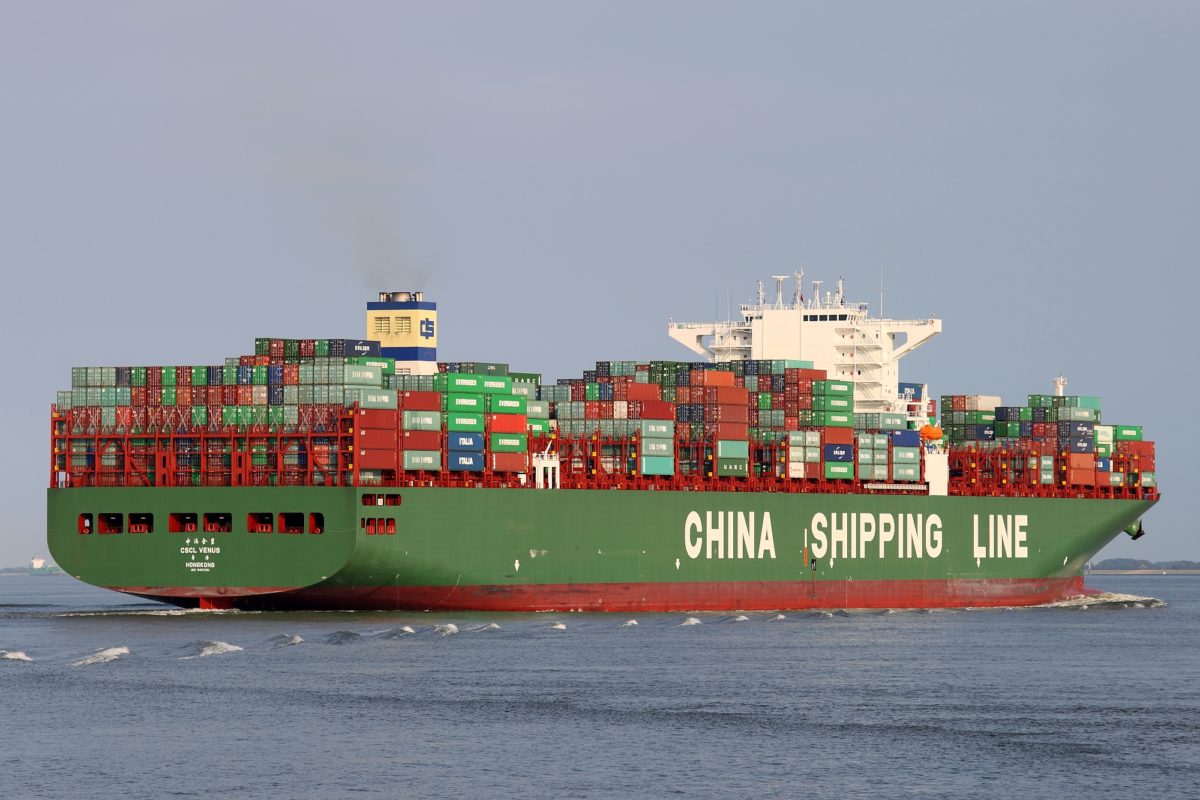
Venus envy: Not big enough!
Ninety Percent of Everything was a good and informative read, and provides a start contrast to another classic on merchant shipping I read a few years ago, John McPhee's Looking for a Ship. While written a mere 23 years ago, McPhee's story of one of the last American-crewed and registered general cargo ships reads like Conrad penned it. George's book isn't nearly as well-written...McPhee remains a master of making difficult subjects a pleasure to delve into...and has some digressive passages some readers may find a touch disjointed, but it is still an excellent introduction to a vast and global enterprise without which we would soon starve in rags.

And I for one, can't wait for containers to have AIS beacons.

2013-12-12

Reading this was a bit of a Fluke


Now I know, too.
Between work, boat work and work, I don't read fiction the way I used to. Boating magazines, technical papers on "floating grounds" and other mysteries of boat electrics, sure. Even three-week old copies of The Economist. But fiction? Not so much.

So it was only in the spirit of random restlessness that I thought "I can't read one more thing about long splices or pole guys or ditty bags tonight. I need to read something funny."

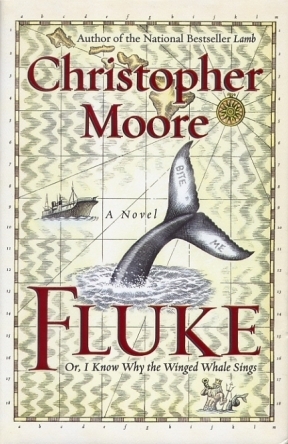
So naturally, I go for a nautically themed novel, even if it was a gift I gave to my wife 10 years ago. Fluke, by Christopher Moore, is about the slightly obssessive "action nerds" involved in cetacean research, or, in plainer terms, whale scientists. Nate, the vaguely middle-aged protangonist, works on a shoestring budget in Hawaii trying to figure out the meaning of the elaborate song of the humpback whale. Complicating things are a saucy grad student with mysterious secrets, a photographer with a very loyal streak, and a faux-Rasta surfer dude with the world's most intricate bong.

Funny and wry, the novel would be not much more than a diverting character study, but it gets weird in a way Vonnegut would have (and may have) enjoyed and to say more would spoil it. Let's just say that our whale boffin finds his answers, and it may be some time before he's comfortable with them. Me, I got comfortable right away. If you like some science in your fiction, Fluke is a salty romp.

2013-07-24

A stellar voyage into the natural world


The original hardcover


Something a little less likely today--and after a gap in posting of nearly a year, alas...not a lot of time for reading for pleasure!

Like many an unrepetent devotee of the printed word, I frequently pick up books of a certain age from the bargain bins of those bookstores that persist in our increasingly reading-hostile world. At least, I consider it hostile to reading at length, and for what might be considered pleasure, and with a measure of comprehension.


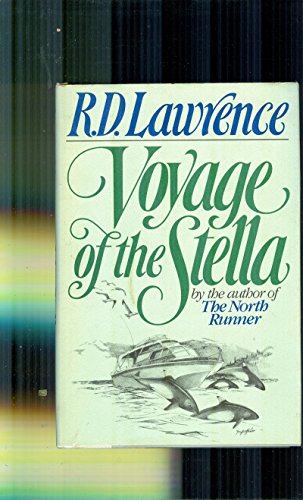
I found such pleasure and comprehension in this volume, written by Canadian naturalist and wildlife author R.D. Lawrence back in 1982. It describes events 10 years prior to publication, when, in the wake of his younger wife's untimely death, he sought middle-aged solace in a motorboat trip to what we now call Haida Gwaii. Part therapy, part marine biology, and all wonder, Lawrence's tale of his journey north to the Alaska/B.C. border is both interesting on its own merits and is quite revealing of how our view of the natural world has changed profoundly in the last 40 years.

I am rather abashed to admit that I knew nearly nothing of R.D. Lawrence, the man, or the public figure. While clearly a nature writer of some renown, one whose extensive list of titles continues to inspire current readers (he died in 2003 and was writing well into the 1990s), much as do the works of Farley Mowat and the programs of David Attenborough, two still-living rough contemporaries of R.D. Lawrence and his peers in popularizing the joys of the natural world through description..

Like Mowat and Attenborough, Lawrence was that now-extinct breed, the self-trained naturalist. Armed only with scientific insight, and absent academic qualifications (see Jane Goodall, although she eventually obtained degrees in her field, having more or less created her field), keen observers such as Lawrence were, through their writings, the interpreters for city folk of the natural world before much more than staged TV "nature" shows and a previous generation's (E.T. Seton, artists such as The Group of Seven) love of the natural, as opposed to the artifice of man, were available. Lawrence himself was a battle-scarred veteran of World War II, and came to Canada post-war having been served a more than generous portion of carnage. I detected in some of his ideas and statements a touch of what would today be characterized as post-traumatic stress disorder, a term which most of the WWII vets I've known would snort at. Whatever Lawrence's ills were, however, the cure was always found in the Canadian wilderness.

It's the early 1970s. The Stella Maris is a compact, 24-foot motorcruiser purchased by the author in order to do specimen collection up the coast of British Columbia. Lawrence, salving grief, is straightforward about his rationale for undertaking such a potential hazardous (the boat is small, the ocean big; distances are great and settlement sparse) journey. There's no sposoring institution, and no real sense that much more than Lawrence's curiosity is driving the voyage. At best, it could be considered a "working vacation", although it seems to the poetic Lawrence to be much more.

Lawrence's comments about the natural world reveal much about the time in which he writes. Killer whales or orcas, as they are now generally known, are considered vicious, well, killers of larger whales, commercial fish species and one gets from Lawrence the sense that his contemporaries view them as a sort of 25 foot sea rat.

Not to Lawrence. His encounters aboard and while diving with curious and biddable orcas persuades him that they are intelligent and social creatures, which may have been news at the time, but which today most schoolchildren seem to grasp. That and Lawrence's rather ornate writing style seem to date this book, but it's simply the style of a man who wishes to use all of his rhetorical skill to convey simple truths: Nature is not our dominion, but is that within which we live, a totality from which we divorce ourselves at peril.

Lawrence draws parallels between the natural and less-natural worlds in the variable state of the native communities that he encounters on his voyage. Some settlements are depressing and full of drunken or otherwise damaged natives (we know a great deal more today, of course, why that might have been the case). Others are "dry" and seem more self-sufficient; Lawrence finds these places not only more to his taste, but closer to his philosophy of working with, rather than presiding over, the natural world.

An interesting read about a beautiful part of the world, Voyage of the Stella, despite featuring a stinkpotter, is of interest to any sailor who not only appreciates travel by boat, but realizes that a boat can be a great platform from which to observe the beauty of nature...minus humans.

2012-07-23

Cartophilia in jeopardy?

Maphead: Charting the Wide, Weird World of Geography Wonks, by Ken Jennings

The author of this entertaining, breezy volume on "the secret shame" of cartophilia, or love of maps and charts, is perhaps best known as the most successful contestant on the perpetual TV quiz show Jeopardy. As might be expected, the book is as full of facts and asides and references as befits the writer's status as a polymath; what is less expected is that Jenning's writing is mildly witty, if firmly rooted in current cultural tropes.

Not for navigational purposes

Jennings has in common with most sailors of my acquaintance both a fascination for and a facility with maps and charts of all kinds, along with the conviction that he is, or was, singular in his "geonerdiness". Geography as a school subject, which of course is much more than just map-gazing, is no longer taught to most children, a cultural decision Jennings, predictably, finds short-sighted. He returns at several points to our declining respect for "spatial intelligence", and our increasing reliance on navigation of the everyday world being outsourced to GPS-driven devices and smartphones. As a sailor, I hear (and occasionally see) the consequences of either failing to look beyond the screen in the boat, or failing to properly interpret what is being seen on either screen or before one's eyes. Navigation is a learned activities, and a map, either paper or electronic, is only ever an aid. In a world where maps of all types (find me a Thai restaurant, show me house prices in a one-kilometer circle) are downloadable to cellphone, the actual opportunity to orient oneself in space without assistive technologies are increasingly rare.

Avoid sailing off the edge

The one or two who read this may occasionally use a compass, the GPS-age equivalent of stone axe, and thereby learn to square headings and bearings with reality and the nearby presence of large iron objects. Others may have an innate sense of direction, or the knack of intuiting from cues in the environment their way around an otherwise unknown territory.

Jennings' book isn't about those people. Those people, salted with a sort of spatial OCD, are the start point for  geonerds of landmass proportions.After a little personal show and tell and a brief history of cartography, Jennings delves into the various sub-classes of "mapheads": vintage map collectors, who spend millions on the products of centuries-dead cartographers, whose fanciful fillings in of the "there be dragons" sections of a poorly charted planet seem to spur some compulsive desire in the minds of collectors. It's not as if you can use a 16th-century map as, well, a map. Others map imaginary landscapes; Jennings notes that a key feature of most fantasy epics are lovingly detailed maps; J.R.R. Tolkien's "Middle Earth" and even the recent Game of Thrones series come to mind. Still others attempt to "bag", colonial-explorer-style, over 100 countries visited, itself a race against time as Jennings records that most members of the "Traveler's Century Club" are both moderately to very wealthy and moderately to very old.

Perhaps the most affecting and, as Jennings relates, personal chapter is related to a National Geographic "Geography Bee", for which children regurgitate astouding volumes of geographic factoids. Very much the poor relation to the better-known spelling bees, the Geography Bee is arguably more difficult and gruelling: Jennings, pop culture's Mr. Know-it-all, is humbled before the depth of these driven and sometimes slightly odd children and their vast geo-knowledge.

Shouldn't this be an app?

Jennings, while a confirmed maphead, is no Luddite. His hectoring car GPS is considered almost a member of the family, and he relates his own obsessive interlude participating in the new "sport" of geocaching, which is basically a pointless treasure hunt that relies on handheld GPS receivers and Web-based lists. The "pointlessness" becomes apparent to Jennings only after several months of frantic findings and hidings, which seem to me to be akin to bungee-jumping: it's the illusion of danger and adventure, not real dangerous adventure. Jennings concludes with an investigation and mediation upon the significance of projects such as Google Earth. Will "one world" become more obvious to all when every one-metre square on its surface can be found with a few mouse clicks from every other one-metre square? What of privacy? Google Earth StreetViews shows most of the Western world's urban front yards and satellite shots of backyards. I don't mind this, personally, but I don't recall signing a consent form. Thus, says Jennings, are modern conveniences changing the nature of what we consider private territory.

An interesting, if lightweight, book, and perfect for the foredeck hammock, particularly if you yourself retain or still nurture a love of all things navigational and cartographic.


2012-01-19

DIY for motivated masochists, sorry, boat owners


Optimize Your Cruising Sailboat: 101 Ways to Make Your Sailboat Better
By John Roberts,
ISBN: 0-07-141951-9


Boat Improvements for the Practical Sailor

By Stephen J. Fishman

ISBN: 1-57409-068-2


The weather outside may be frightful, but the cabin sole’s delightful, or so the sailor’s take on the old song might go. ‘Tis the season for hot toddies by the fire, to be sure, but only after a good weekend day’s work on a cloaked boat.

Yes, now, in the proverbial dead of, and not in the merry month of May, is the best time to attack those fix-it projects aboard. Whether you own a boat of sail or power, the one thing all folk of the sea seem to have in common is the inordinate amount of maintenance, improvement, repair and plain upkeep their vessels demand. That’s why a good nautical library tends to break down into two parts: one, books of rousing tales of adventure at sea, and the other? Books with chapter headings like “How to Fix Your Refrigeration Before The Steaks Thaw” and “Advanced Crimping”.

Winter boat shows may convince you to get fancy electronic gear or robotic PFDs, but a couple of books reviewed below address the more practical side of boating: where to put stuff, and how to correct the flaws and shortcomings endemic to the production boat industry, where they sure know how to make good looking boats, but try to find chart stowage or a decent wet locker these days. Or fiddles where fiddles should be. Or a place to stow binoculars or that probably not at all waterproof GPS that keeps bouncing around the cockpit.

Well, I could go on, but these books do it better, and provide easy to make solutions for ambitious sailors looking to add comfort, class and safety to their pride and joy. Both books are similar to Ferenc Mate’s now-venerable The Finely Fitted Yacht, but are much more up-to-date and don’t feature Mate’s idiosyncratic sense of encrusted humour. The first book, Optimize Your Cruising Sailboat, is a new one from John Roberts, who did something similar with Why Didn’t I Think ofThat?, a compendium of sailor-tested tips, tricks and fabrications for a more pleasant trip at sea. This book is somewhat more in-depth and rigorous, being divided into sections headed Make Your Boat More Comfortable, Easier to Handle, More Seaworthy and so on.

Roberts assumes an intermediate level of skill on the part of the reader, such that if you aren’t comfortable cutting new portholes or drilling and bedding deck hardware, call guys who can and point at the diagrams. Projects like fabricating companionway doors and covering the interior cabin lining with wood are fairly labour-intensive, but making stern rail seating could be done to a professional-looking standard on a calm afternoon. Roberts does reintroduce some bygone ideas to the modern boat owner that are too clever to stay forgotten, like angled teak grab bars in the head, grab poles in today’s cavernous cabins, and the nearly extinct art of installing lee cloths, which is a very handy and I think essential method of staying put when off watch in a seaway.

Some things Roberts mentions, like how to rig reef lines and why fixed props slow boats down, are pretty basic, but I still found this a worthwhile read, as would any fan of the books of Don Casey or the various columns in Cruising World and similar magazines.

By contrast, BoatImprovements for the Practical Sailor has fewer projects, but greater depth. This book is a well-written set of instructions on how to do common improvements and repairs right, the first time. Particularly helpful are diagrams and names of some of the specialty tools, techniques and products used in boat repair, with a sound evaluation of all the alternatives and their proper use. Good examples include: how to bring control lines to the cockpit, how to insulate the engine compartment, installing a second shore power inlet, and how to maximize battery and bilge pump performance. Fishman’s style is clear and concise, and as he’s essentially self-taught, his tone is pleasantly matter-of-fact. There are several projects dealing with the installation or improvement of electronic gear, such as cockpit stereos and VHFs, TVs and their antennas, and the like. As many sailors use their boats as small, pointy cottages as much as sail-powered vessels, Fishman’s projects will appeal to them.

The problem and the pluses of books like these is that hardly anyone will read them from cover to cover, because the improvements range from dead obvious to fairly daunting (anyone up for fabbing a V-berth cedar closet? Fishman is) and for some people, these are just another pair of hobbyist books. For others, however, if even one chapter provokes an “aha! I can do that and save hundreds!” moment, they are well worth the read and the price.

Anything but a ride at Disneyland


Dangerous Waters: Modern Piracy and Terror on the High Seas 
By John S. Burnett 
ISBN: 0-525-94679-9


This was a frightening read eight years ago and it's still unfortunately quite relevant. It was also a necessary one for me to read at the time as it solidified my determination to skip the Red Sea and selected parts of Indonesian waters in any future cruising plans and has proven prophetic in terms of how bad things have got. The more recent The Pirates of Somalia (review here) is a more current and specific companion piece, but Dangerous Waters shows the macro picture of how the pirating of international shipping is happening...still...elsewhere. 

The author, a long-time and experienced yachtsman and former merchantman, takes as his start point his own first-hand experience with piracy a decade ago and explains how this nefarious trade has exploded in certain crucial parts of the world and may well represent a terroristic as well as an economic threat to the law-abiding countries of the world.

Burnett’s own pirate encounter could have been nastier, but it was sufficiently disturbing to spark a interest in the topic that now, as his book demonstrates, seems encyclopedic. The author chooses to focus on South-east Asia, particularly the heavily traveled Malacca Straits, Singapore and the northern coasts of Indonesia. He makes a convincing case that assaults on merchant shipping, yachts and cruise liners, ranging from simple theft to full-blown hijackings and murder, are an increasing and increasingly dangerous phenomenon that may soon feature a political element. If the image of two skyscrapers plummeting to the ground did not alarm First World citizenry, imagine the effect of an 1,100-foot long tanker laden with 300,000 tons of petroleum ramming at over 20 knots into a city’s waterfront. Catastrophic doesn’t begin to cover it, which is why Burnett’s book should be bedside reading for international security policymakers.

Burnett touches lightly on the opportunistic—and sometimes fatal—pirate attacks on sail cruisers and passenger ships, but his main focus is on cargo ships, particularly the massive oil, gas and bulk carriers that play so large a part in today’s “just-in-time” world economy. Burnett’s personal observations, made on several trips through known pirate waters, are that very few ships are secure from attack, and that today’s largely automated ships and scanty crews present few obstacles to sufficiently motivated pirates. Two-stroke outboards and bamboo ladders, homemade knives and the element of surprise frequently suffice to raid even the largest of supertankers. 


Lest the term “pirates” conjures up romantic notions of Robin Hood-like rascals, Burnett’s raw descriptions of shoeless village boys with machetes and attitude should shut them down quickly. Today’s pirates range from fisherman seizing the moment to highly organized, lavishly equipped and heavily armed international crime syndicates who can seize, repaint, reflag and empty of cargo any ship in a matter of hours. Unlikely as it may seem, many huge vessels “disappear” this way every year, and very few people outside the shipping industry acknowledge or even know of the extent of the problem. So-called “phantom ships” are subsequently used to transport illegal cargo such as drugs, arms and illegal immigrants. Burnett cites as part of this problem the simultaneously convoluted and lax rules regarding “flags of convenience” and the inadequacy of the “laws of the sea”, which leaves international waters essentially unpoliced, precisely because they belong to no one nation.

Burnett profiles the few and generally understaffed and underfunded locals in the region dedicated to fighting piracy, and they’re a tough and determined lot working against steep odds. Although there are signs that governments and the shipping industry are taking more effective steps to combat piracy, Burnett suggests that a lack of awareness of ship vulnerability is a large obstacle. Imagine, he posits, if a FedEx 747 were hijacked and taken to a foreign airfield. Vast military, police and governmental resources would be devoted to its immediate and safe recovery, and CNN would probably hire an F-18 to get “live footage”. And yet ships are attacked and sometimes stolen by the dozens every month, and no one wants, seemingly, to know.

This well-written and compelling book may change that yet.

2012-01-07

An inspiration to the aspirational sailor


High Endeavours: The Extraordinary Life and Adventures of Miles and Beryl Smeeton
By Miles Clark
Prairie Books
$26.95, 447 pp. (likely less as a second-hand book)
ISBN: 0-88833-313-7

Trolling back through my shelves, I thought I'd see what books really impressed me and inspired me to think outside of my sailing comfort zone.. This biography of Miles and Beryl Smeeton, epic cruisers of the ‘50s and ‘60s, was skillfully done by Miles Clark, their godson and a yachting writer in his own right. It's a real find.

The Smeetons, thanks to husband Miles’s many and popular books, were already well-known some 50 years ago as pioneering world cruisers of amazing persistence and grit. The epitome of the “can-do” couple, the Smeetons were risk-takers in the post-war years when equipment was minimal and rescue by others was out of the question. You had to have the resources to save your own life and your own boat, which, given that the Smeetons actually did this, makes them expert cruisers. As Clark’s tale shows, however, as a couple and as individuals, they were so much more. Both were insatiably curious explorers and adventurers, and theirs is one of the most interesting biographies—and most memorable love stories—I have ever read.

Both Miles and Beryl came from military families, and perhaps it was the intimate experience of violent loss combined with the qualities of self-reliance and openness to adventure that made them such a good match. Arguably, it was Beryl and not Miles who was the greater adventurer, lighting off as she did in the 1930s alone, linguistically unprepared and determinedly “on-the-cheap” on cross-Asian tours and a memorably grueling tour of Patagonia. It is difficult today in an era of helicopter skiing, Goretex, EPIRBs and GPSes to imagine how or even why a middle-class Englishwoman would travel the least-charted parts of the globe, but Beryl’s taste for exoticism knew few limits.

Miles, an accomplished and extraordinarily tall (over six and a half feet) officer in the Indian army, had somewhat more bourgeois comfort levels,  but nonetheless had an equal urge to push his physical and mental limits. An accomplished horseman, rock-climber and hiker, and—during World War II—warrior and leader, Miles did bring to Beryl’s almost manic adventuring a leaven of experience and common sense. Still, by war’s end, and with a young child in tow, the Smeetons entered their 40s not with the desire to settle down, but to buy a wooden ketch they barely knew how to sail (the famous Tzu Hang), and then to sell up and homestead in British Columbia. As with all their seemingly circuitous schemes, the B.C. farm led to more sailing—the Smeetons, typically, soon became expert—and eight years of world cruising.

As related in the bestseller Once Is Enough, the Smeetons endured not one, but two horrific dismastings on the approach to Cape Horn. Characteristically, despite nearly getting killed, the Smeetons eventually completed a circumnavigation, including high-latitude, quasi-“research” trips that garnered them fame and awards. The only criticism I would have of their jam-packed lives is that their only daughter Clio seemed to endure long absences in boarding schools--and perhaps the anxiety of wondering whether her parents would die falling off a mountain or drowning beneath the sea—while Beryl and Miles burnt away their smoldering wanderlust.

Again, it is difficult to think of a couple in their mid-fifties (both Beryl and Miles were born around 1905), armed only with sextant, charts and a first-generation transistor radio, undertaking world cruising before virtually any facilities, rescue or weather services were in existence for "little boats", and, tackling the sort of conditions that put off Volvo 60 racers today. Along with the Hiscocks, Francis Chicester and a  few other pioneering cruisers and racers, the Smeetons showed the way.

Less well-known, if equally fascinating, is how the Smeetons (who eventually became Canadian citizens), started a wildlife sanctuary in Cochrane, Alberta in the late ‘60s that eventually led to the re-introduction of the Swift Fox, a small canid that had been hunted to extinction on the Prairies. Whether it was the sea, the mountains or death itself, the Smeetons were up to the challenge, it seems, and this is one of the greatest sailor stories you’ll ever read, even if 75% of it takes place on dry land. It's the best introduction I can imagine to the more specific sailing works the Smeetons wrote themselves.


2011-12-21

Cruising is women's business


Changing Course: A Woman's Guide to Choosing the Cruising Life
by  Debra Ann Cantrell
$20.95, 192 pp.
ISBN:0071427899


This slim volume, which came recommended to me and has continued to get mention since its 2004 publication, might be one of the most important reads the husband portion of a cruising couple could purchase. The cruising women I’ve read about, like Ellen MacArthur, Beryl Smeeton and Tania Aebi, have tended toward the brusquely efficient, stiff-upper-lip types. Which is all well and good, I suppose, but that’s not most sailing husbands, is it, never mind their perhaps less-enthusiastic wives.

Now, given that’s it aimed squarely at women, that comment might seem counter-intuitive. Well, so are most male sailors, in my experience. Men like systems, fixing things, getting places. So do a lot of women, but they tend to want to discuss the ramifications first. Men, generally, can have a little trouble in this department.

That ‘little trouble’ is the subject of this interesting book, and if you like it, there's an interesting website as well. Many men of a certain age and a nautical cast of mind decide to go cruising, and many a Caribbean bar features these now-divorced skippers who didn’t quite take into account what selling up and sailing would mean to their spouses. Although Debra Cantrell’s study, and this is a study, assumes that it’s men who propose and women who dispose with the cruising life, much of this book is applicable to any pair, gay, straight or otherwise undefined shipmates, where one seeks a life-altering adventure and the other doesn’t…at least at first. In that sense, it's kin to the unfortunately obscure Two in a Boat, which I favourably reviewed below.

Despite the anecdotal approach, this is essentially a social survey of how women cope with their husband’s determination to cruise. When a woman who has spent years building a career, making a home, raising kids and forming strong local relationship hears that her beloved Skipper wants to bugger off to Margaritaville…well, it can create stresses. Cantrell charts her own course from, roughly, total opposition, fear and loathing to acceptance and finally, well-seasoned enjoyment. This course allowed for speaking with other women in the cruising life, many of whom were not (at first) remotely gung ho about the idea. and others who found it was the first step in an eventual marital breakdown. The briefest of chats with boat club bar staff will confirm this, alas. Boats and marriages founder when the crew is not in accord.

This isn’t a “downer” book at all, however. Few men are Captain Blighs of the under-40 foot class, but few seem to understand on an emotional level what it means to trade a Leaside three-bedroom for a dimly lit V-berth and the joys of ill-secured holding tanks. Such men should read this book avidly if they have any plans to sail off with the spouse. 

Among the common sense suggestions are the one to keep the house and rent it out, except for one room, as a paid-off house will provide both storage space, cruising income and a place to sack out on occasional trips back. I like this so much I've set that process in motion with tenants already in the upper two floors.

Another suggestion was that wives and husbands should maintain a “boat” account, and separate accounts for themselves, so that neither has veto power over perceived “luxuries” (or the least concessions to a civilized life, take your pick). This means in practical terms that either skipper can bail in a hurry, as there’s nothing more nasty than being trapped on a boat with no means of leaving it at the next port. As Cantrell points out, if you aren’t on the same page regarding what constitute reasonable expenditures, why go sailing? Camping is cheaper and frequently less damp and you can stretch your legs until you get to a nice pooping tree.

Women are strongly encouraged in this book to take sailing lessons, diesel repair lessons, navigation courses and the like. That’s because it’s better and safer to have two sailors aboard, but also because knowing this salty arcana means women (and non-sailing husbands of female skippers) can gain confidence and enjoyment out of doing things, and can perceive why their husbands wanted to go in the first place with "the skipper eye".. Cantrell admits that while a few women who went sailing hated it even after gaining the experience, there are a roughly equal number who overcame initial fears and concern and are now keenest on keeping cruising.

Cantrell’s writing style, while relying a little heavily on “therapeutic” language for my taste, is clear and informative, and is a good place to start when you have a spouse that doesn’t want to go, but doesn’t want to stop you, cruising. While I have in the past read the books I review for free, I haven't always gotten to keep them (it’s not that good a gig). This one, I bought. No higher recommendation exists.

Tale of the Scale a touch on the gusty side


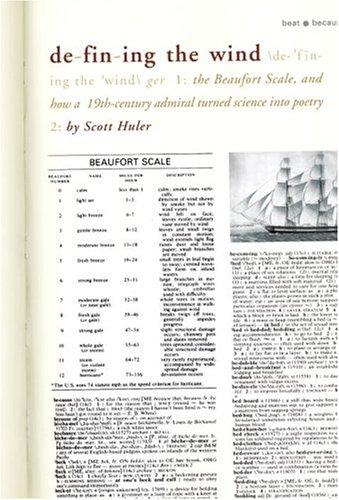
Defining the Wind: the Beaufort Scale, and How a 19th-Century Admiral Turned ScienceInto Poetry

by Scott Huler, Crown Publishers

ISBN: 1400048842, 2004


 Even before I took up sailing, I was more than vaguely aware of the time-tested and oft refined Beaufort Scale and its handy ability to summarize the real-life effects of wind on sea and (later) land. What I didn’t know was much about Beaufort, other than he was of Napoleonic Wars vintage and was one of those polymath captains who turned to science after many years of fighting for the British Navy.

Oh, and the Beaufort Sea in the Arctic? That’s named for him, as well.

After reading Scott Huler’s somewhat obsessive 2004-penned tale of how his own poetic, rather than his scientific, interest in the Beaufort Scale drew him into a 200-year odyssey of research, sidetracking, pilgrimages and mystery solving, I know more about a lot of things, one of which is Scott Huler’s mental processes.

Huler was a copy editor when he stumbled across Beaufort’s famous scale of wind effects in the early 1980s. There it was, in a dictionary of all places, and he found the compact rhythm of “Force 5, Fresh Breeze, small trees in leaf begin to sway; crested wavelets form on inland waters” a sort of nature-focused haiku, and he determined to learn more about this Beaufort fellow and his windy prose. The result defines the wind, but perhaps not as he intended.

What he learned is that the story of man’s measurement of the natural world around him has been a fairly slow and torturous progression from “damn, it’s somewhat blowy out there, what?” to today, when satellites can track rogue waves in the middle of empty oceans, down to the closest ten centimetres, and no trip around the bay is complete with checking out Windguru. Beaufort himself (and while we learn a great deal about him, he is only one of many characters in this story) was an exceptionally good, Cook- and Vancouver-level hydrographer and surveyor, as well as a good observer of the natural world when he wasn’t being shot in the face or the groin by the enemies of His Britannic Majesty.

Beaufort either devised independently or modified an existing wind scale to sea conditions, and amended his original scale in terms an average sailor would understand: thus, ‘Force 5, bring in topsails, whitecaps form’, and so on. The scale didn’t achieve wide acceptance or the Beaufort moniker until close to the end of Beaufort’s long and detail-oriented existence; since then, it has seen derivatives such as the Petersen Sea State Scale, and various land-based methods of clocking the wind by its effects on one’s surroundings, not by its effects on those little hand-held windspeed doohickeys increasing common in the Wednesday night club races.

Huler’s own prose I found a little wide-eyed and repetitive in spots, but you can’t bring in Captain Cook, William Bligh, Charles Darwin and other big names of the 18th and 19th century and be considered boring. Beaufort and his scale, the way Huler tells it, tells us a great deal of not only what people thought worth measuring two hundred years ago, but what they thought worth thinking about in a world being transformed by technology and improving science. This book’s sole fault is that this former copy editing author could have used a bit of trimming: I found him a wee bit long-winded.

If sailing's a religion, here's the Book of Common Care


Nigel Calder’s Cruising Handbook,
By Nigel Calder,
International Marine/McGraw Hill,
$78.55, 588 pp.
ISBN: 0-07-135099-3


There’s been dozens of “how-to-sail/race/cruise” books over the years, although some of the best, by authors such as Slocum, Chichester and Moitessier, have been more memoir than handbook. Still, few sailors haven’t read the tales from the seasoned sailors who’ve circumnavigated.

Most of us have more modest goals centered around docking and anchoring properly, and maintaining our boats to a standard that will allow us to enjoy them safely and reliably. Many of us may never sail beyond Lake Ontario—which can be quite an efficient teacher in its own right—but that doesn’t mean we can’t benefit from the knowledge of those who sail in saltier waters. Perhaps even having that knowledge at hand will make going offshore, or South, or wherever, more plausible.

That’s where heavy-duty compendiums like Nigel Calder’s Cruising Handbook come in. The very prolific and thankfully competent Calder, besides being an accomplished cruiser around North America (although interestingly, not so muchoffshore) is well known for his cruising guides, sailing articles, and his clearly written manuals on recreational boating systems, particularly his very popular and complementary Boatowner’s Mechanical and Electrical Manual. Calder’s style is clear, concise and knowledgeable, which makes this heavily illustrated latest work a pleasure to read. Even nearing the decade mark since publication, a quick review confirms that it remains an excellent cruising guide.

Still, it’s a crowded field. I recently picked up a second-hand copy of Donald Street’s The Ocean Sailing Yacht, and despite the fact that it’s as old as my boat (1973), there’s a wealth of solid sailing lore in there applicable to the modern sailor. The same can be said even for the late Eric Hiscock’s cruising manuals, even though they are now about 50 years old. Lots of salty wisdom in the older guides, along with tips and tricks you won’t find elsewhere. Of course, there’s very little on radios, electric bilge pumps, autopilots and cockpit-activated windlasses. There’s a great deal on sextants, knots and the new if slightly suspicious wonder fabric, Dacron. I would have to say the only better book I've read that attempted to touch all the cruising bases was Beth A. Leonard's hulking The Voyager's Handbook, which I reviewed below some time ago.

So, Calder has currency still in his favour. He also has a good handle on the tyranny of convenience: Today’s boats, or older boats being renovated to today’s standards, paradoxically require more of the sailor technically than any recreational boat of even 20 years ago. Today’s boats have powerful diesels, computers, electric heads, pumps and windlasses, radar, radios and GPS. At night, they glow like Christmas trees with cabin, navigation and anchor lights, not all sensible low-amp LEDs.. If they get too hot from the propane ovens, they can fetch a beer from the built-in fridge and flick on the air conditioning. It’s a far reach from throwing a cooler into a Tanzer 22 and heading for Kingston in 1978, but it’s the reality for many of today’s cruisers, and Calder’s “systems” approach shows how best to design, install and service the extensive wires, cables and hoses the modern cruiser requires.

It’s this focus on the cruising crew and their needs that distinguishes Calder’s book from equally good, if more generalist, manuals such as John Rousmaniere’s now venerable Annapolis Book of Seamanship. That worthy volume, now in its third or maybe fourth edition, makes, I think, a better primer for the novice sailor than Calder’s book, which takes as one of its starting points that one has actually taken a few trips in a boat and is ready to consider a longer-term commitment to the lifestyle.

Much of Calder’s commentary, for example, consists of his observations on what makes a good coastal and offshore cruiser (hint: he doesn’t think it’s the same boat). In this respect, he’s the opposite of, say, a new yacht salesman. Calder likes simple, robust, and redundant, and he’s partial to fullish keels, skegs, and cutter rigs with hank-on staysails. From a systems point of view, he’s willing to advise on how to wire a boat for all mod cons, but he’s not a fan of wide boats with a lot of beam aft. In this sense, he’s advising for the true cruiser who needs a safe boat for passagemaking, and not the sailor looking for a boat-shaped drinks patio.

Despite its pure utility as a checklist for cruisers, therefore, I found Calder’s book a compelling argument for the attributes to seek in my next boat, the one I’d like to take offshore, South, or wherever. At nearly eighty dollars Canadian, it’s a pricey manual, but there’s enough common sense and current thinking here to make it a solid addition to those heading out, or just thinking about it.

A slightly morbid treasury for reluctant sailors


By John Rousmaniere
McGraw-Hill Ryerson
$39.95, 338 pp.
ISBN: 0-07-1377795-6
Available through www.nauticalmind.com and selected bookstores

As a writer, John Rousmaniere will be familiar to many as the author of The Annapolis Book of Seamanship, a useful and often updated (the fourth edition is due January, 2014) sailor’s Bible that illustrates not only Rousmaniere’s extensive sailing experience, but also his easy way with a word, or even a string of them in series. Others will know of his columns at Sailnet.com or his frequent articles for the sailing magazines. I mention him below as the author of the seminal post-race analysis, Fastnet: Force 10, a book that, despite its age, still sets the bar for "what went wrong while sailing"detective work. 

As handy with a word processor as with a winch handle, Rousmaniere is a genial spinner of sea tales, and that makes the often harrowing content of his latest effort both compelling and nerve-wracking. I've also met the guy at a "Safety at Sea" seminar I attended in 2010 and he's even a decent public speaker. But I don't wish to fawn overmuch: let's look at the work.

Not many Lake Ontario recreational boaters bother to leave the dock on the rare summer’s day when a good blow is building, but for those who do, the experience can be thrilling, and can test the skills and the canvas of even a veteran sailor, particularly when a squall hits. Exponentially more challenging is the open ocean, where long fetches, giant and wobbly storm systems and inadequate or insufficient talent at the helm or vessel strength can make the merely nasty into the truly destructive.

Rousmaniere has been this way before: in his excellent Fastnet, Force 10, he charts the fate of his fellow competitors in the 1979 Fastnet Race south of Ireland, one of the most deadly sporting events in history. Rousmaniere’s habitually has been in the sort of storms he describes, and has lived to tell the tale, presumably with keyboard fingers intact. Were he not a good writer, this first-hand experience alone would recommend him as a compiler of the memorable series of disasters-at-sea that comprise After the Storm.

Rousmaniere also holds post-grad degrees in history and divinity, both of which serve him well here. The divinity degree expresses itself in subtle ways. Rousmaniere relates how in the case of many survivors of shipwrecks and/or storms, sometimes dramatic religious impulses were born. This is effectively the case with the Biblical figure of Jonah, for whom a deity-delivered storm (delivered somewhat spitefully, as is often the case in the Old Testament) leads to spiritual reform. Rousmaniere also cites the story of the Apostle Paul, for whom a Mediterranean tempest proves to be a opportunity for converting the pagan sailors who are reportedly mightily impressed by Paul’s calm mien and sturdy faith as the seas build.

More contemporary, and perhaps most impressive in its way, is the story of John Newton, a long-time ne’er-do-well brutalized (and made brutal in turn) as a functionary on a slave ship of the 18th century. Against all odds, Newton helms a crippled, half-flooded ship through a vicious Atlantic gale and back to dry land. This experience has a transformative effect on Newton. He renounces his former life, becomes a popular preacher, and eventually pens Amazing Grace, perhaps the most popular hymn ever written. Few people know that tune as being the work of a one-time slaver, and fewer know of its origins in a protracted storm.

God isn’t behind every tale of salty woe, however: Rousmaniere’s too much the seaman to ascribe every shipwreck to celestial judgment. Sometimes poor human judgment, or perhaps hubris, will suffice. The case of Percy Bysshe Shelley kicks off the book, and it’s a cautionary tale for performance racers and poets alike. Shelley, a bit of a rock star of his day in the versifying line, was like most young men have always been: when he wasn’t attending to the ladies, he enjoyed the best toys he could afford. Prime among them was Ariel, an overcanvassed, narrow, insufficiently decked racing yacht that Shelley enjoyed but evidently couldn’t be bothered to learn how to sail. Rousmaniere lays the inevitable tragedy at the poet’s door: God may send the tempest, but there is no excuse for unseamanlike behaviour. Even though this book doesn't feature stories in which the latest gear like SPOT Messangers or PLBs plays a role, there is still a lot of excellent and specific safety knowledge for those considering more trying passages.

Rousmaniere tells other tales familiar (the abandoned Mary Celeste and another, less well-known “ghost ship”) and new-to-me (the appalling demise of proto-feminist Margaret Fuller in the wreck of the Elizabeth) all of which make this an appealing treasury not only of heartbreak, but of survival and reassessment after grim episodes. Prophetically (and perhaps not unexpectedly in a religiously attuned writer such as Rousmaniere), he closes the book with a chapter on the latest generation of world ocean racers, most of whom have felt close to death in storms, despite all the latest in gear and knowledge, and some of whom, like their seafaring ancestors, have vanished beneath the waves, and not been seen again.

So if you've ever wondered why sailors are a fatalistic lot, this occasionally morbid if engaging treasury will suggest some pretty persuasive reasons why that state of mind prevails.

Lessons from the sea for a voyaging family


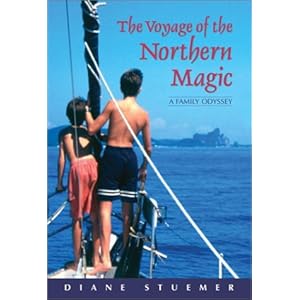
The Voyage of the Northern Magic: A Family Odyssey
By Diane Stuemer,
McClelland & Stewart Ltd.,
$37.99, 369 pp.
ISBN: 0-7710-8260-6
Available through www.nauticalmind.com and selected bookstores

If family-oriented sailing stories strike you as good Christmas reading, the late Ottawa circumnavigator Diane Stuemer’s tale of a four-year voyage around the planet in a 40-year-old steel ketch makes for solid Yuletide fare. I recently re-read a bit of this book, which I had bought when it first came out, and it's still a hell of a tale.

Herbert and Diane Stuemer, self-described as a typical suburban family with three sub-teen boys, found that the onset of middle age and Diane's brush with cancer were all the motivation they needed to uproot themselves and to follow a windborne dream.


Essentially an impulse buy for the Stuemer family, their aged 42-foot Dutch ketch , which would be renamed Northern Magic, would prove to be a sturdy, if not luxurious, home for the five-member family on their west-about passage. Before leaving, Diane Stuemer cleverly contracted with an Ottawa daily paper to provide updates on the voyage; not only did this spur enormous local interest in—and assistance for—their voyage, but it provided Stuemer with a basis for her book, the slick web site dedicated to their trip at www.northernmagic.com, and what appeared to be a burgeoning career for herself as a motivational speaker.

That career was unfortunately cut short in 2003 when Stuemer's melanoma flared up again into cancer. I saw her speak a few weeks before she died, and she was a very positive person. Her story was inspiring, but also a cautionary tale: my wife and I have, unlike herself, striven to prepare ourselves to equal and complementary skill sets and to gather diverse yacht-handling experiences. A handyman skipper like Herbert Stuemer, no matter how high his own level of skill, with kids aboard and an initially new-to-sailing wife yielded no foundation in safety for running their boat: there are hair-raising early trials that underlined this for my wife and I in big, red-ink strokes.


Diane Stuemer possessed a degree in journalism and, before becoming 'first mate' on Northern Magic, a career in advertising. Both skill sets facilitate her telling of a tale of adventure that fairly crackles off the page. Stuemer and her husband decided to world cruise essentially on impulse, and both had to muster up a great deal of enthusiasm and positive thinking to overcome some of the hurdles the seas, the vessel and the inhabitants of various ports threw at them. My heart went out in particular to Herbert Stuemer, the father and 'captain' of Northern Magic. As as a former renovator and technical teacher and all-around Mr. Fixit, he by default performed the seemingly constant repairs and adjustments needed on the old boat. I lost count of the number of times he seemed to be installing yet another rebuilt alternator upside down in the bilge during a nausea-making gale. Commendably, Stuemer isn’t shy about saying what equipment worked like a charm…and which failed miserably. As for the boat itself, old steel Dutch ketches seem a bullet-proof choice for the inexperienced sailor. As can be seen on this blog's boat rebuilding sister, The World Encompassed, I took some of those ideas of "pilothouse" and "steel" to heart when we bought Alchemy, our steel pilothhouse cutter, in 2006. All credit to Northern Magic on that score.

Speaking of equipment issues, it’s interesting to compare the Stuemers’ story with a similar one from 15 years further in the past: the voyage of Paul Howard and Fiona McCall’s Lorcha. As told in two popular books from the ‘80s, the circumnavigation of Lorcha seemed by contrast to the Stuemers to be more relaxed, possibly because of the greater experience of the sailing couple, and probably because the earlier boat’s most complex gear was a SatNav. Northern Magic, due to Diane Stuemer’s journalistic needs and the requirements to keep the kids occupied with electrons, featured laptops and e-mail, radar and GPS and a lot of gear not available to or generally desired by the smaller boat and crew of Lorcha a mere 15 years earlier.

Another difference between the '80s and our new century is that it’s a nastier world for cruisers these days and wasn't that different at the turn of the millennium. Stuemer relates problems with bureaucracy-mad officials, pirates in the Red Sea, and even an unwanted, ring-side seat to Al Qaeda terrorism. On the plus side, however, Stuemer found her family becoming gradually involved in the often impoverished lives of the folk they met. This has led to the long-term support of orangutan habitat preservation in Borneo, and paying for the education of some young people in Kenya. This is the best part of Stuemer’s narrative, in my opinion: how cruising eventually took her away from her own concerns and gave her a broader view of the world, one in which even a limited effort could make a great difference. That alone takes this tale well beyond tourism.